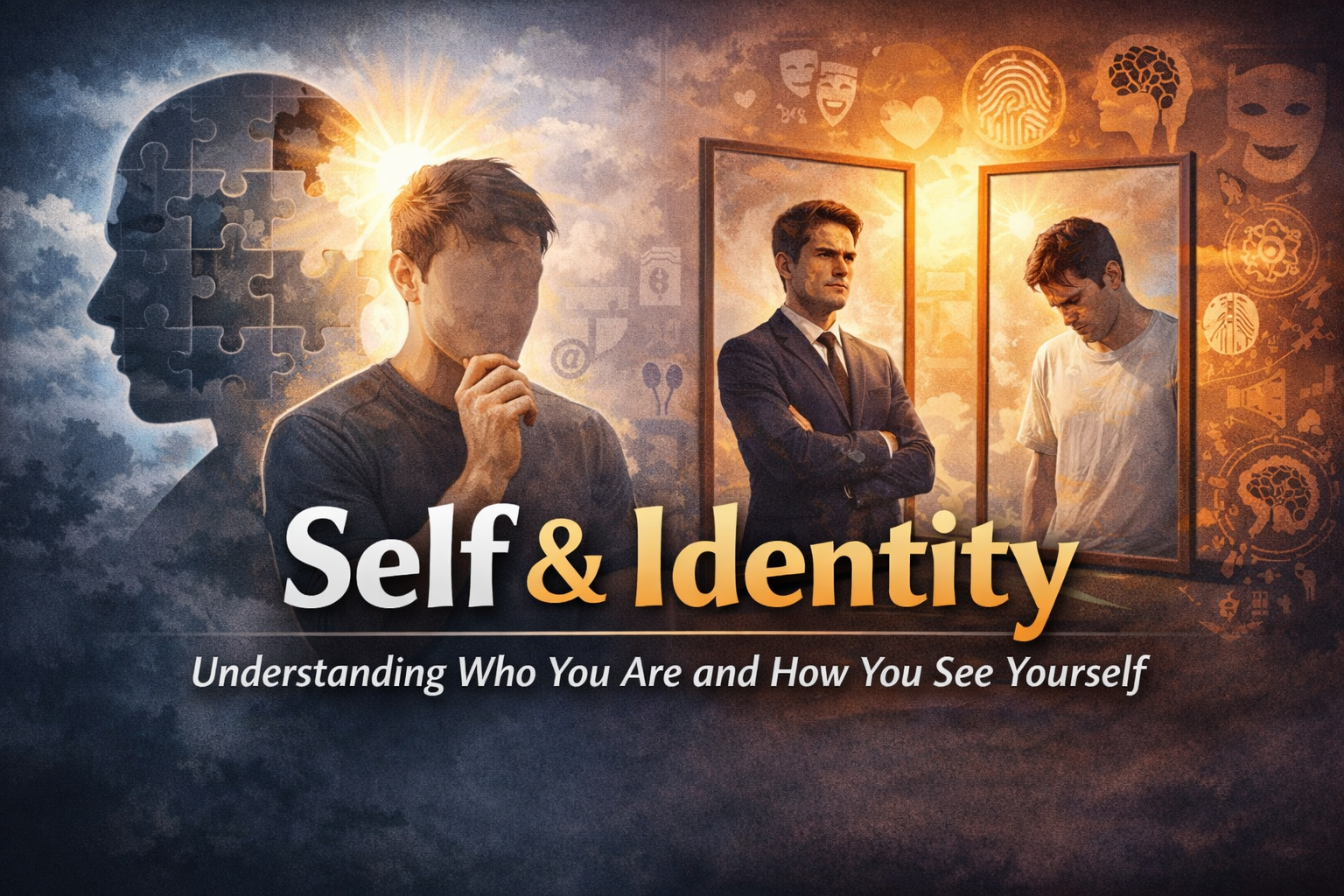
Self & Identity
1. You Built a Life — But Not an Identity
Many of us grow up learning what to do, not who to be.
-
Get good grades
-
Secure a stable job
-
Make your family proud
-
Stay responsible
-
Avoid failure
These are achievements. But they are not identity.
When your life is built on expectations instead of self-understanding, you can succeed externally while feeling disconnected internally.
You may be living a life that looks right — but doesn’t feel like yours.
2. You’re Performing, Not Expressing
Sometimes we unknowingly create a “role” version of ourselves:
-
The responsible one
-
The strong one
-
The dependable one
-
The achiever
But who are you when no one is watching?
When your actions are driven by approval, fear, or comparison, you’re performing. Performance brings validation — but not fulfillment.
Expression, on the other hand, comes from authenticity. And authenticity requires self-awareness.
3. You’re Following Goals That Aren’t Truly Yours
It’s possible to chase dreams you inherited, not chose.
Society defines success in visible terms:
-
Salary
-
Status
-
Stability
-
Recognition
But personal meaning is invisible.
If your goals were chosen out of pressure, fear, or habit, reaching them won’t satisfy you deeply. Because fulfillment doesn’t come from achieving goals — it comes from alignment with your inner values.
4. You Confused Productivity with Purpose
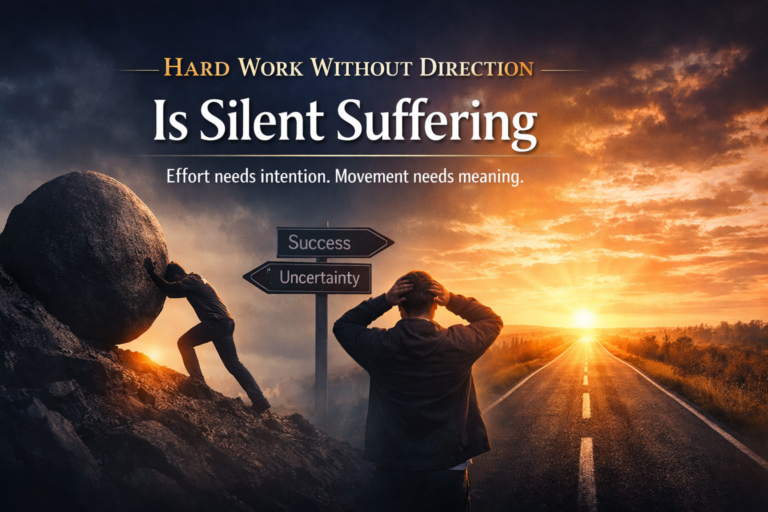
Being busy feels powerful.
But busyness is not the same as direction.
You can fill every hour of your day and still avoid the deeper questions:
-
What actually matters to me?
-
What kind of person do I want to become?
-
What feels meaningful beyond achievement?
Without purpose, productivity becomes distraction.
5. You Never Paused to Ask: “Who Am I?”
Self-awareness is rarely taught.
We are trained to react, achieve, and adapt — but not to reflect.
Identity develops through:
-
Reflection
-
Honest self-questioning
-
Emotional awareness
-
Understanding your strengths and wounds
If you’ve never paused long enough to explore yourself, feeling lost is natural.
You can’t connect with a self you’ve never fully met.
Signs You’re Experiencing an Identity Disconnect
-
You feel successful but unfulfilled
-
You struggle to explain what you truly want
-
You feel different versions of yourself in different environments
-
You constantly seek external validation
-
You fear slowing down because silence feels uncomfortable
These are not weaknesses. They are signals.
Signals that it’s time to reconnect.
How to Start Finding Yourself Again
1. Create Quiet Time
Turn off noise — social media, constant productivity, endless input. Identity reveals itself in silence.
2. Journal Without Filters
Ask yourself:
-
What do I genuinely enjoy?
-
When do I feel most alive?
-
What drains me?
-
What am I pretending not to know?
Write honestly. No audience. No performance.
3. Separate Expectations from Desires
List what you are doing because you want to and what you are doing because you feel you should.
That gap is where clarity begins.
4. Redefine Success
Instead of asking, “How far have I come?”
Ask, “How aligned am I?”
Success without alignment feels empty.
Alignment without applause feels peaceful.
You’re Not Lost. You’re Evolving.
Feeling lost often means your old identity no longer fits — but your new one isn’t fully formed yet.
That in-between space feels uncomfortable.
But it’s also growth.
You’re not behind.
You’re not ungrateful.
You’re not failing.
You’re awakening to the deeper question:
“Is this truly me?”
And that question is powerful.
Final Thought
Doing everything right doesn’t guarantee feeling right.
External success builds structure.
Self-understanding builds meaning.
When you align who you are with what you do, the emptiness slowly fades — not because life becomes perfect, but because it becomes authentic.
And authenticity is where fulfillment begins.