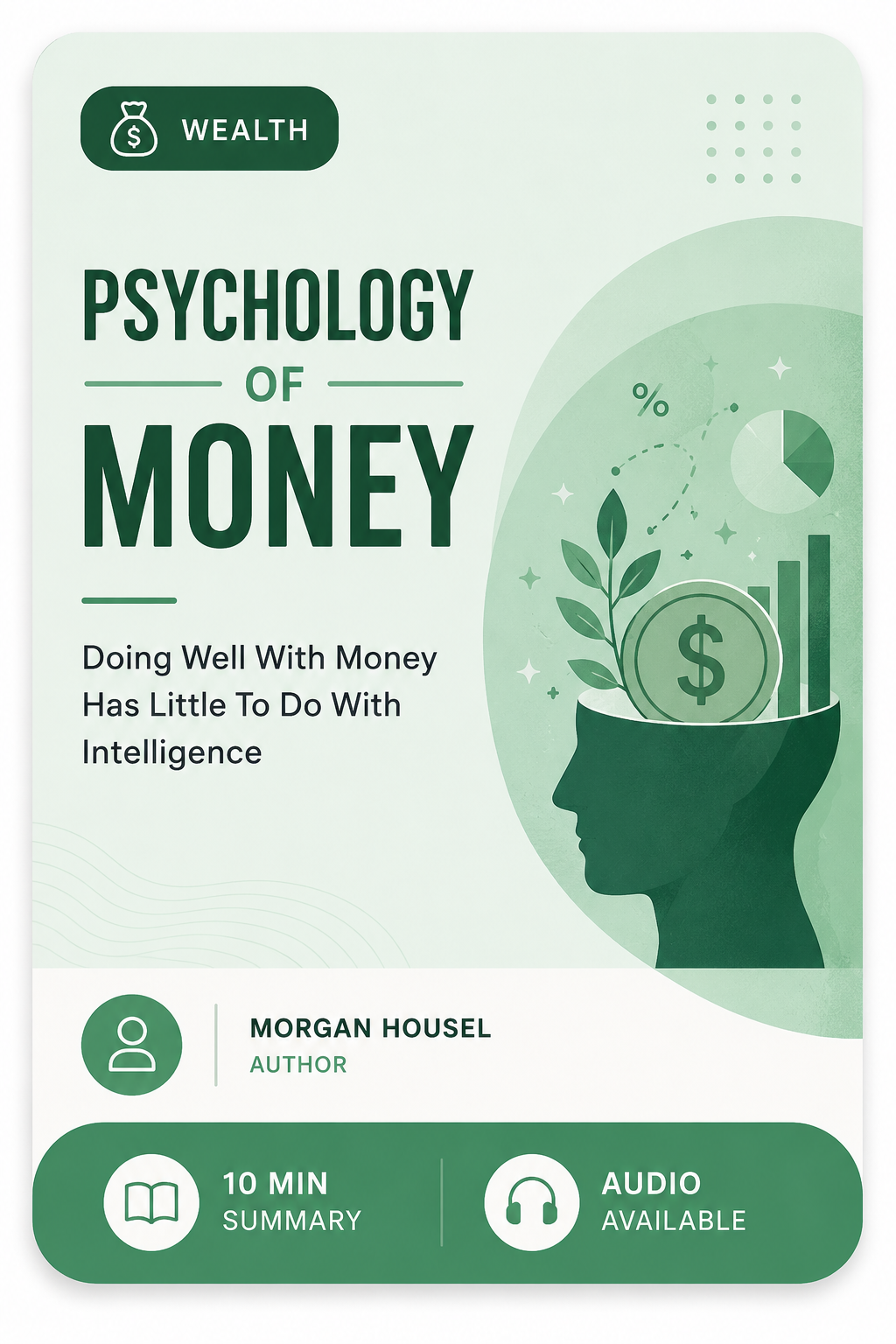
The central message of The Psychology of Money is simple but powerful: building wealth is less about intelligence and more about behavior.
We often believe that making money requires extraordinary knowledge, but the truth is that patience, consistency, humility, and emotional control matter far more. You don't have to be the smartest investor or earn the highest salary to become financially successful. You simply need to make better decisions over time.
This book encourages us to focus on what we can control—our spending habits, saving habits, investing discipline, and long-term thinking. When you develop the right mindset and stay consistent, your money begins to work for you instead of controlling your life. That's the real path to financial freedom.
★★★★★ 5.0·5 ratings
Sign in to permanently save your library, reading progress and ratings.
THE IDEA SPACE
About this book
Understand the central idea, see the six most important ideas, and turn the summary into something practical.
THE CENTRAL IDEA
Core idea
The central message of The Psychology of Money is simple but powerful: building wealth is less about intelligence and more about behavior.
We often believe that making money requires extraordinary knowledge, but the truth is that patience, consistency, humility, and emotional control matter far more. You don't have to be the smartest investor or earn the highest salary to become financially successful. You simply need to make better decisions over time.
This book encourages us to focus on what we can control—our spending habits, saving habits, investing discipline, and long-term thinking. When you develop the right mindset and stay consistent, your money begins to work for you instead of controlling your life. That's the real path to financial freedom.
Why it matters
We all want to earn more, save more, and build a secure future. Yet many of us never learn the most important truth about money: success with money isn't just about how much you know—it's about how you behave.
The Psychology of Money helps us understand why smart people sometimes make poor financial decisions and why ordinary people often become wealthy through patience, discipline, and good habits. Instead of teaching complicated investing strategies, this book shows you how your emotions, beliefs, and daily choices shape your financial future.
As you read, you'll begin to see money differently. You'll learn how to avoid common financial mistakes, stay calm during uncertainty, and make decisions that help you build lasting wealth. Whether you're just starting your financial journey or looking to improve your relationship with money, this book gives you practical lessons you can apply for the rest of your life.
READ WITH INTENTION
Before you begin
Before reading The Psychology of Money, many of us believe that building wealth is only about earning more, finding the perfect investment, or having exceptional financial knowledge. We often compare ourselves with others, worry about market fluctuations, and make emotional decisions based on fear or excitement. Saving feels difficult, investing seems confusing, and financial success appears to be something only a few lucky people achieve.
Many of us also spend money to impress others, chase short-term rewards, or believe that one big opportunity will solve all our financial problems. Instead of having a clear financial philosophy, we react to circumstances without understanding how our own mindset influences every decision we make.
After applyingAfter applying the lessons from this book, you begin to see money through a completely different lens. Instead of chasing quick success, you focus on building habits that create lasting wealth. You become more patient during uncertainty, save with purpose, invest with confidence, and stop comparing your journey with someone else's.
You understand that financial freedom isn't about showing wealth—it's about creating choices, security, and peace of mind. Every financial decision becomes more intentional because you now realize that your behavior matters more than perfect timing. Rather than asking, "How can I get rich quickly?" you begin asking, "How can I make consistently better decisions for the next 20 years?" That simple shift changes not only your finances but also the way you think about life.
THE SIX IDEA MAP
Six key ideas
The six key ideas already stored in your Woderfin summary — designed to be scanned, remembered and revisited.
6 key ideas
01KEY IDEA
Wealth Begins with Behavior, Not Income
Many of us believe that earning more money will automatically solve our financial problems. However, lasting wealth depends more on how we manage money than on how much we earn. Two people can receive the same salary and end up with completely different financial futures because their habits are different. Every decision—whether we save, spend, invest, or borrow—shapes our future. When you build good financial habits, even a modest income can grow into long-term security.
Imagine two friends who each earn ₹60,000 per month. One spends almost everything on shopping, gadgets, and dining out. The other saves 20%, invests regularly, and avoids unnecessary debt. After ten years, the second person has built financial security, while the first continues living paycheck to paycheck.
Woderfin Insight: Your income opens the door, but your habits decide how far you go.
02KEY IDEA
Patience Creates Wealth Faster Than Panic
We often expect quick results, but real financial growth takes time. Markets rise and fall, businesses experience ups and downs, and life brings unexpected challenges. If we panic every time something goes wrong, we may make decisions that hurt our future. Instead, staying patient allows time, consistency, and compounding to work in our favor.
Suppose your investments fall by 20% during a market downturn. One person sells everything out of fear, while another continues investing every month. Years later, the patient investor benefits from the market's recovery and long-term growth.
Woderfin Insight: Time rewards patience more than emotions.
03KEY IDEA
Freedom Is the Real Purpose of Money
Money is not only for buying expensive things. Its greatest value is the freedom it gives us. Financial security allows us to make better choices, spend more time with family, pursue meaningful work, and face emergencies without constant stress. True wealth is measured by the options we have, not the things we own.
Imagine having enough savings to leave a stressful job and start your own business, take a career break to learn a new skill, or spend quality time caring for your family. That is the freedom money can provide.
Woderfin Insight: The richest life isn't filled with possessions—it's filled with choices.
04KEY IDEA
Comparison Steals Financial Happiness
We naturally compare ourselves with others, but this habit often leads to poor financial decisions. Someone else's success, car, house, or lifestyle doesn't reflect their complete financial picture. Instead of competing with others, we should focus on building a life that aligns with our own values, goals, and responsibilities.
Your colleague buys a luxury SUV through a large loan. You feel tempted to do the same, even though your goal is saving for a home. By staying focused on your own priorities instead of trying to impress others, you move closer to lasting financial freedom.
Woderfin Insight: Don't compare your Chapter 3 with someone else's Chapter 30.
05KEY IDEA
Small Decisions Build Extraordinary Results
Many people wait for one big opportunity to become wealthy. In reality, wealth is often built through hundreds of small, consistent decisions. Saving a little every month, avoiding unnecessary purchases, learning continuously, and investing regularly may seem ordinary, but together they create extraordinary outcomes over time.
Instead of spending ₹200 every day on unnecessary online purchases or food delivery, you invest that amount every month for several years. What looks like a small sacrifice today can become a significant financial asset in the future.
Woderfin Insight: Great wealth is usually the result of small habits repeated consistently.
06KEY IDEA
Think Before You Follow Financial Advice
In today's digital world, financial advice comes from everywhere—social media, YouTube, news channels, influencers, and friends. While some advice is valuable, not all of it is right for you. Before following any strategy, ask whether it matches your goals, your risk tolerance, and your financial situation. Independent thinking protects your money better than blindly following trends.
A social media influencer claims a particular cryptocurrency will double your money within months. Instead of investing immediately, you research the project, understand the risks, and decide whether it fits your long-term investment strategy. This simple pause can prevent costly mistakes.
Woderfin Insight: Never invest because someone is confident. Invest because you are informed.
TURN KNOWLEDGE INTO ACTION
Make it practical
Your practical takeaway
After applying the lessons from this book, you begin to see money through a completely different lens. Instead of chasing quick success, you focus on building habits that create lasting wealth. You become more patient during uncertainty, save with purpose, invest with confidence, and stop comparing your journey with someone else's.
You understand that financial freedom isn't about showing wealth—it's about creating choices, security, and peace of mind. Every financial decision becomes more intentional because you now realize that your behavior matters more than perfect timing. Rather than asking, "How can I get rich quickly?" you begin asking, "How can I make consistently better decisions for the next 20 years?" That simple shift changes not only your finances but also the way you think about life.
NEXT STEP
Today
Today, spend just 30 minutes understanding your current financial situation.
Write down your monthly income, fixed expenses, savings, investments, loans, and unnecessary spending.
Don't judge yourself—simply become aware of where your money goes.
Then choose one financial habit you want to improve, such as saving before spending, avoiding impulse purchases, or tracking every expense for the next seven days.
Next, ask yourself one powerful question: "Does every rupee I spend today bring me closer to the life I truly want?" Let this question guide your decisions throughout the day.
Remember, financial transformation begins with awareness, not perfection.
One small action today can become a life-changing habit tomorrow.
NEXT STEP
This week
This week, create a simple financial plan that reflects your personal goals instead of comparing yourself with others.
Set a monthly savings target, review your subscriptions and unnecessary expenses, and identify one area where you can reduce spending without reducing your happiness.
If you haven't started investing yet, spend time learning about basic investment options such as index funds, mutual funds, or retirement plans before making any decision.
If you already invest, review your portfolio calmly without reacting to short-term market movements.
Most importantly, commit to avoiding emotional financial decisions for the next seven days.
Before making any purchase above your comfort limit, wait 24 hours and ask whether it's a need, a temporary desire, or an investment in your future.
NEXT STEP
This month
During this month, focus on building a stronger financial foundation.
Create or strengthen your emergency fund, automate your monthly savings, and review all outstanding loans or debts.
If possible, pay off the highest-interest debt first while continuing to invest consistently.
Read one additional personal finance book, listen to financial podcasts, or spend time improving your money knowledge.
Discuss financial goals with your family or partner so everyone works toward the same vision.
At the end of the month, review your progress honestly.
Celebrate every improvement, no matter how small, because consistent progress matters far more than perfection.
NEXT STEP
Long term
Your long-term goal is not simply to become rich—it is to become financially free.
Build habits that you can follow for decades: save consistently, invest patiently, avoid unnecessary debt, continue learning, and make decisions based on long-term value instead of short-term emotions.
Create a financial system that continues working even during difficult times.
Protect yourself with emergency savings, diversify your investments, and regularly review your goals as your life changes.
Remember that wealth is not measured by expensive possessions but by the freedom to make choices without constant financial stress.
Woderfin Long-Term Mission
Don't chase quick money.
Build a lifetime of wise financial decisions.
Every small habit you practice today becomes part of the legacy, freedom, and future you create tomorrow.
Move through your action plan one step at a time.
FINAL TAKEAWAYMoney is more than numbers in a bank account—it reflects the choices we make, the habits we build, and the mindset we develop over time. Throughout this journey, we've learned that lasting wealth isn't created by luck, high income, or perfect market timing. It's built through patience, discipline, continuous learning, and the ability to stay calm when life becomes uncertain.
The greatest financial advantage isn't knowing every investment strategy; it's understanding yourself. When you control your emotions, spend intentionally, save consistently, invest wisely, and think long term, you give your money the opportunity to grow with you. Every small decision you make today becomes part of the future you're creating.
Remember, financial freedom is not about having everything you want. It's about having enough to live with confidence, purpose, and peace of mind. Start where you are, use what you have, and keep improving one decision at a time. Wealth is not built overnight—it is built every single day through consistent actions.
Woderfin Final Insight: The best investment you'll ever make is not just in your portfolio—it's in your mindset, your habits, and your ability to make wise decisions for years to come.FAVOURITE QUOTE“"Doing well with money has less to do with how smart you are and more to do with how you behave."
— Morgan Housel
This quote captures one of the most powerful lessons from The Psychology of Money. Morgan Housel reminds us that financial success isn't reserved for the smartest people or those with advanced knowledge of investing. Instead, it often belongs to people who consistently make wise decisions, remain patient, and stay disciplined during both good and difficult times.
Many of us spend years trying to learn complex financial strategies, yet we sometimes overlook the habits that matter most. Saving regularly, avoiding unnecessary debt, thinking long term, controlling emotions, and making thoughtful decisions usually have a greater impact on our financial future than finding the "perfect" investment.
From Woderfin's perspective, this quote encourages us to focus on improving our daily behavior rather than chasing quick success. When we develop strong financial habits and stay committed to our goals, wealth becomes the natural result of consistent action. In the end, our mindset and behavior shape our financial future far more than intelligence alone.”
— Morgan Housel
FIND YOUR REASON TO READ
Who is this book for?
["If you're a student, this book will help you build a healthy relationship with money before you start earning. Instead of learning through expensive mistakes, you'll discover why saving, investing, patience, and smart financial habits matter from the very beginning. The lessons will help you think beyond your first paycheck and prepare for a lifetime of financial confidence. The earlier you understand how money really works, the greater your advantage will be in the future.","As entrepreneurs, we make financial decisions every day that can shape the future of our businesses. This book teaches you how to manage uncertainty, stay patient during difficult times, avoid emotional decisions, and think beyond short-term profits. You'll learn why protecting your wealth is just as important as creating it and how a long-term mindset can help you build a stronger business and a more secure financial future.","Whether you're starting your career or already earning a good salary, this book will help you make smarter financial decisions. You'll understand why a higher income alone doesn't guarantee wealth and how your daily habits determine your long-term success. By applying these lessons, you can reduce financial stress, invest with confidence, and build lasting security for yourself and your family.","Content creators, freelancers, artists, writers, designers, and digital creators often experience unpredictable income. This book helps you develop financial discipline even when your earnings fluctuate. You'll learn the importance of saving during good months, preparing for uncertain periods, and making thoughtful decisions instead of emotional ones. Financial stability allows you to focus more on creating meaningful work and less on worrying about money.","As parents, we don't just pass on money—we pass on financial habits. This book helps us become better financial role models for our children by teaching patience, responsible spending, long-term planning, and wise decision-making. When we build strong financial habits ourselves, we create a foundation that benefits not only our own future but also the generations that follow.","Great leaders understand that financial wisdom extends beyond personal wealth. Whether you lead a company, a team, or a community, this book teaches principles like patience, thoughtful risk-taking, emotional control, and long-term thinking. These qualities help you make better decisions, inspire confidence in others, and create sustainable success instead of chasing short-term results. Strong financial thinking often leads to stronger leadership in every area of life."]
THE PERSON BEHIND THE IDEAS
Meet the author behind this book
Explore the author information already connected to this title in your Woderfin summary system.
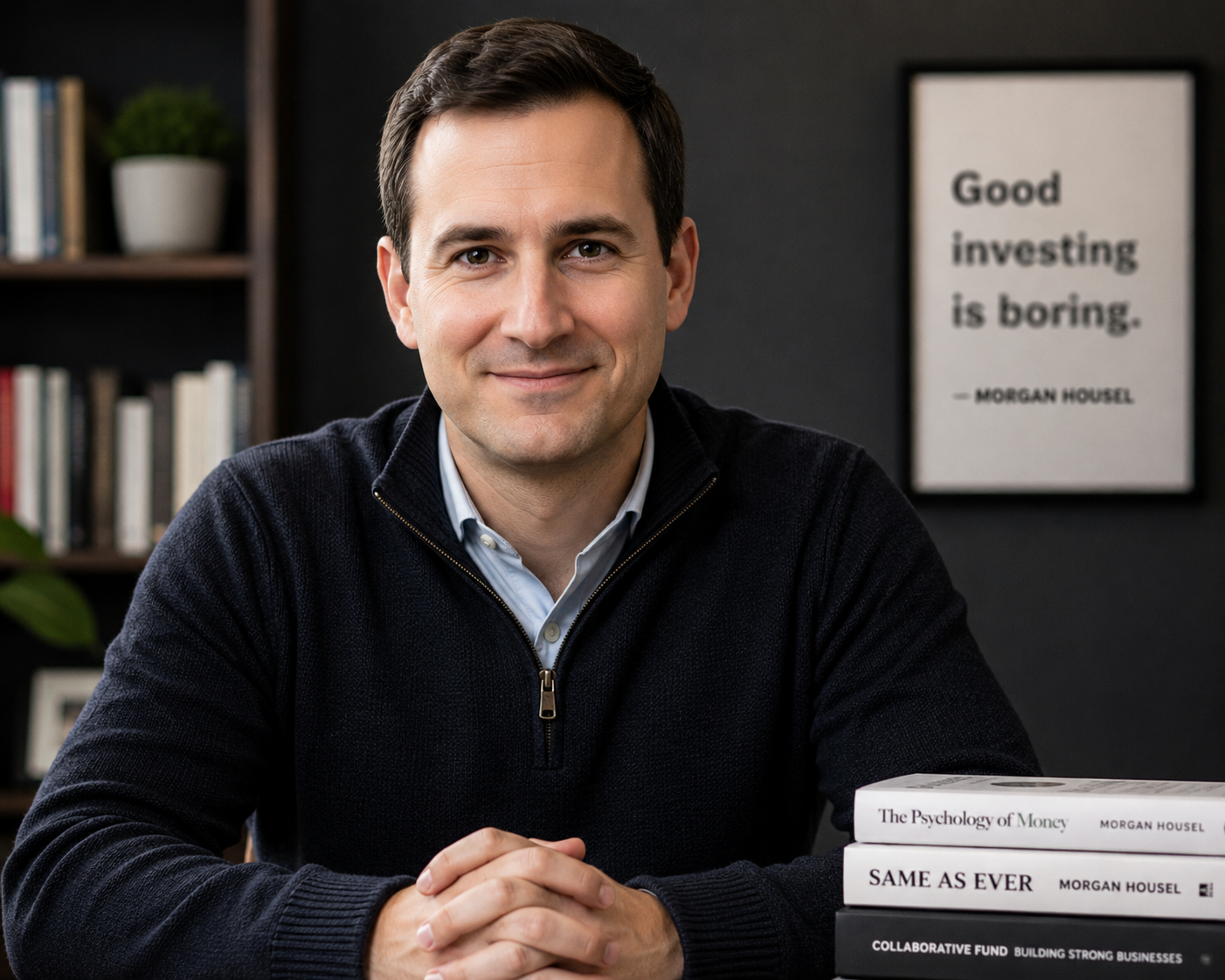
Morgan Housel is an internationally recognized author, investor, and financial writer best known for making complex money concepts simple, practical, and relatable. He is the author of the bestselling book The Psychology of Money, which has sold millions of copies worldwide and has been translated into dozens of languages. Throughout his career, Housel has written extensively about investing, wealth, decision-making, and human behavior, helping readers understand that financial success depends more on psychology than on technical knowledge. Before becoming a full-time author, he worked as a columnist for The Motley Fool and later became a partner at The Collaborative Fund, where he focuses on long-term investing and business strategy. His writing has earned several prestigious awards, including recognition from the Society of American Business Editors and Writers. Morgan Housel's work continues to inspire readers, investors, entrepreneurs, and professionals by encouraging them to make thoughtful financial decisions, embrace long-term thinking, and build lasting wealth through patience, discipline, and sound judgment.
Introduction: Build Wealth by Understanding Yourself
Most of us grow up believing that becoming wealthy is simply a matter of earning more money or finding the perfect investment. We spend years learning how to study, work, and build careers, yet very few of us are taught how to think about money. As a result, many intelligent people struggle financially, while others with ordinary incomes quietly build extraordinary wealth.
This summary invites us to look at money from a different perspective. Instead of focusing only on numbers, we will explore the emotions, habits, decisions, and beliefs that shape our financial lives every single day. The way you save, spend, invest, and react during uncertain times often has a greater impact on your future than your salary or financial knowledge alone.
As we move through these lessons, you'll discover that financial success isn't about making perfect decisions. It's about making better decisions consistently. Small choices repeated over months and years can create remarkable results, while emotional decisions made in a single moment can undo years of progress.
We'll also learn that everyone's financial journey is different. Comparing ourselves with others rarely helps because every person has unique experiences, opportunities, and challenges. Instead of chasing someone else's definition of success, we can create our own.
If you're looking for practical wisdom rather than complicated financial formulas, you're in the right place. These ideas will help you think more clearly, avoid common money mistakes, and build habits that support long-term financial freedom. Together, we'll discover that the greatest investment we can ever make is not just in our bank account—but in the way we think and behave with money.
Chapter 1: No One's Crazy
When it comes to money, it's easy to look at someone else's decisions and think they are irrational. We often wonder why one person spends freely while another saves every penny, why someone takes huge investment risks while another avoids them completely. The truth is, no one is naturally crazy with money. Every financial decision is shaped by personal experiences, emotions, opportunities, and challenges that others may never fully understand.
Each of us grows up in a different environment. Some people experience financial security from childhood, while others witness debt, unemployment, or constant uncertainty. These experiences quietly become the foundation of our beliefs about money. That's why two intelligent people can make completely opposite financial decisions and both feel they are making the right choice.
Instead of judging others, we should first understand our own financial story. Ask yourself why you spend the way you do, why certain investments excite or scare you, and what past experiences continue to influence your choices today. Self-awareness is one of the most valuable financial skills you can develop.
As we recognize that every person follows a unique financial journey, we become more patient with ourselves and others. We stop chasing someone else's path and begin creating one that matches our own goals, values, and circumstances. Real financial wisdom doesn't come from copying what everyone else is doing. It comes from understanding your own behavior, learning from your experiences, and making thoughtful decisions that move you closer to the future you truly want.
Chapter 2: Luck & Risk
Life doesn't always reward hard work immediately, and success isn't always the result of perfect planning. Sometimes the right opportunity appears at the right moment, while other times unexpected events change everything. This is where luck and risk quietly shape our financial journey.
We often admire successful people without realizing how many fortunate opportunities helped them along the way. At the same time, we may judge those who struggle without knowing the challenges or setbacks they faced. While our choices matter, we must also recognize that timing, circumstances, and events beyond our control influence the outcomes we experience.
This doesn't mean we should depend on luck or fear risk. Instead, we should prepare ourselves for both. When life goes well, stay humble because success isn't always entirely your own achievement. When life becomes difficult, don't lose hope because setbacks don't define your future either. Every financial journey includes unexpected wins and unexpected losses.
The smartest approach is to build habits that protect us regardless of what happens. Save consistently, avoid taking unnecessary risks, maintain an emergency fund, and think long term rather than chasing quick rewards. These habits won't eliminate uncertainty, but they will help you stay strong when life becomes unpredictable.
As we accept that luck and risk are part of every financial story, we stop comparing ourselves with others and start focusing on what we can actually control—our attitude, our decisions, and our consistency. While we can't predict every outcome, we can prepare ourselves to make wise choices through every season of life.
Chapter 3: Never Enough
In this chapter, the author argues that one of the biggest threats to financial success is never feeling satisfied with what we already have. Constantly chasing more money, more status, or a bigger lifestyle can become a cycle that is impossible to win. When "more" becomes the only goal, we risk making decisions that put our wealth, relationships, and peace of mind at risk.
The author explains that comparison often fuels this mindset. We naturally notice people who have more than we do, and this can make our own achievements feel insignificant. As a result, we may spend beyond our means, take unnecessary investment risks, or sacrifice long-term security just to keep up with others.
The key message is that real wealth is not measured only by how much money we accumulate, but also by knowing when we have enough. Setting clear financial goals and defining what a comfortable life means for you can protect you from endless comparison and unhealthy ambition. Instead of competing with everyone else, we should focus on building a life that matches our own values and priorities.
The author encourages us to appreciate steady progress rather than chasing constant growth at any cost. When we learn to say, "This is enough for the life I want," we make wiser decisions, reduce stress, and protect the wealth we've worked so hard to build. Financial freedom comes not only from earning more, but also from knowing when to stop chasing what we don't truly need.
Chapter 4: Confounding Compounding
In this chapter, the author explains that the greatest power in building wealth is often invisible because it works slowly. Most people expect success to happen quickly, but real financial growth usually comes from small, consistent actions repeated over many years. This is the power of compounding.
The author points out that we often underestimate long-term results because our minds naturally focus on immediate outcomes. Saving a small amount each month or earning steady investment returns may not seem impressive today. However, when those returns continue to grow year after year, they begin to create extraordinary results. Time becomes the most valuable partner in wealth creation.
This lesson isn't limited to money. The author suggests that our habits, knowledge, relationships, and health also compound over time. Every good decision we make today creates opportunities tomorrow, while every poor decision can quietly grow into a larger problem. That's why consistency is often more important than intensity.
Instead of chasing shortcuts or trying to become rich overnight, we should focus on building habits that we can maintain for decades. Investing regularly, avoiding unnecessary debt, learning continuously, and remaining patient may seem ordinary, but together they create remarkable outcomes.
The author reminds us that the biggest financial mistakes often come from interrupting the compounding process. Selling investments too early, constantly changing strategies, or giving up during difficult times prevents us from experiencing the full benefits of long-term growth. When we trust the process and allow time to do its work, even small decisions can lead to life-changing results. True wealth is rarely built in a single year—it is built through patience, discipline, and the quiet power of compounding over a lifetime.
Chapter 5: Getting Wealthy vs. Staying Wealthy
In this chapter, the author explains that making money and keeping money are two completely different skills. Many people believe that becoming wealthy is the hardest part of the journey. However, the author argues that staying wealthy often requires even greater discipline, patience, and self-control.
Getting wealthy usually involves taking calculated risks, working hard, spotting opportunities, or building a successful business. These actions can create rapid financial growth. But once wealth is created, the goal changes. Instead of constantly chasing higher returns, the focus should shift toward protecting what has already been built.
The author emphasizes that long-term success depends less on making brilliant decisions and more on avoiding disastrous ones. A single reckless investment, unnecessary debt, or emotional decision can destroy years of hard work. This is why humility and caution become essential after achieving financial success.
Another important lesson is that we should always prepare for uncertainty. No matter how successful we become, life remains unpredictable. Economic downturns, business failures, health emergencies, and unexpected expenses can appear at any time. Keeping financial reserves, avoiding excessive risk, and maintaining a margin of safety help us survive difficult periods without losing everything.
The author encourages us to think beyond short-term gains and focus on building lasting financial security. Wealth should provide peace of mind, not constant stress. By staying patient, living below our means, and making thoughtful decisions, we give ourselves the freedom to handle challenges with confidence.
The central message of this chapter is clear: earning wealth may require ambition, but preserving wealth requires wisdom. When we learn to value stability as much as growth, we greatly increase our chances of enjoying financial success for a lifetime rather than only for a moment.
Chapter 6: Tails, You Win
In this chapter, the author explains that extraordinary success often comes from just a few exceptional opportunities rather than hundreds of perfect decisions. Whether in investing, business, or life, most of our efforts may produce ordinary results, but a small number of decisions can create an outsized impact. Understanding this idea helps us become more patient and realistic about success.
The author points out that many successful investors, entrepreneurs, and companies experience numerous failures before achieving a breakthrough. Those failures do not define them because a single outstanding success is often enough to outweigh many smaller mistakes. This is why we shouldn't expect every investment, business idea, or financial decision to be a winner.
Instead of becoming discouraged by setbacks, we should accept that failure is a natural part of long-term success. The key is to ensure that our losses remain manageable while giving ourselves the opportunity to benefit when a great opportunity appears. By protecting our downside and remaining consistent, we increase our chances of benefiting from those rare but powerful moments.
The author also warns against judging success or failure based on short-term results. A temporary loss doesn't necessarily mean a bad decision, just as a short-term gain doesn't always prove a good one. Over time, patience allows the truly valuable opportunities to reveal themselves.
The central message of this chapter is that we don't need to be right all the time to achieve remarkable financial success. We simply need to stay in the game long enough for a few exceptional opportunities to work in our favor. When we remain patient, control our risks, and continue learning, those rare winning moments can have a greater impact than all of our small mistakes combined.
Chapter 7: Freedom
In this chapter, the author explains that the greatest value of money is not luxury, status, or expensive possessions—it is freedom. While many people believe money exists to buy bigger homes, luxury cars, or a more impressive lifestyle, the author argues that its most meaningful purpose is to give us greater control over our lives.
True financial freedom means having the ability to make choices without being controlled by money. It means choosing work because it is meaningful rather than because you are forced to pay bills. It means having the flexibility to spend time with your family, take care of your health, pursue your passions, or simply enjoy peace of mind without constant financial stress.
The author emphasizes that this kind of freedom cannot usually be bought overnight. It is built through years of saving, investing wisely, avoiding unnecessary debt, and living below your means. Every rupee you save today becomes an investment in your future independence. The more financial security you create, the more choices you gain tomorrow.
Another important lesson is that freedom looks different for everyone. For some, it may mean retiring early. For others, it may mean starting a business, taking a career break, or having the confidence to say "no" to opportunities that don't align with their values. The goal isn't to copy someone else's lifestyle but to build a life that gives you the freedom to live on your own terms.
The central message of this chapter is simple yet powerful: money is most valuable when it gives us control over our time, our decisions, and our future. When we stop measuring wealth by what we own and start measuring it by the freedom we enjoy, we discover that true financial success is about living life with purpose, flexibility, and peace of mind.
Chapter 8: Man in the Car Paradox
In this chapter, the author challenges the way we think about status, success, and wealth. We often admire people who own expensive cars, luxury homes, or designer clothes because we assume these possessions represent success. However, the author argues that when we see someone driving a luxury car, we usually admire the car, not the person. Most of us don't think, "I want to be that individual." Instead, we think, "I want a car like that."
The author explains that this misunderstanding drives many people to spend money trying to earn respect and admiration from others. We believe that buying expensive things will make people value us more. In reality, people are usually focused on their own lives and their own goals. They may notice our possessions for a moment, but they quickly return to thinking about themselves.
This lesson encourages us to separate real wealth from visible status. Spending money to impress others often creates financial pressure instead of financial freedom. The more we chase external approval, the less control we have over our own financial future. Instead of investing in appearances, we should invest in assets, knowledge, skills, and experiences that improve our lives over the long term.
The author reminds us that confidence doesn't come from owning the most expensive things—it comes from knowing we are financially secure and living according to our own values. True success is not measured by how impressed other people are, but by how peaceful, independent, and fulfilled we feel.
The central message of this chapter is that trying to look wealthy is very different from actually becoming wealthy. When we stop seeking validation through material possessions and focus on building lasting financial security, we gain something far more valuable than admiration—we gain freedom, confidence, and peace of mind.
Chapter 9: Wealth Is What You Don't See
In this chapter, the author explains a powerful idea that completely changes the way we think about money: real wealth is often invisible. We usually notice the things people spend money on—luxury cars, expensive watches, beautiful homes, or designer clothes. What we don't see is the money they have already spent, the loans they may have taken, or the financial pressure they might be carrying. Because of this, appearances can be misleading.
The author argues that true wealth isn't about what you display—it's about what you keep. Money that remains invested, saved, or quietly growing in the background may not attract attention, but it creates financial security and future opportunities. Every rupee that you choose not to spend has the potential to grow, earn returns, and provide freedom later in life.
This chapter encourages us to stop comparing our lives with the lifestyles we see around us or on social media. Many people appear wealthy because they spend heavily, but genuine wealth is measured by financial stability, not by visible possessions. A person who lives modestly while consistently saving and investing may be far wealthier than someone who appears successful on the outside.
The author reminds us that building wealth often requires patience, discipline, and the willingness to delay gratification. Choosing to save instead of showing off may not bring instant recognition, but it creates lasting security and peace of mind.
The central message of this chapter is simple yet profound: wealth is not what people see—it is what remains after you have made wise financial decisions. When we focus on growing our assets instead of our image, we build a future that is stronger, more secure, and far more rewarding than any temporary display of success.
Chapter 10: Save Money
In this chapter, the author explains that saving money is one of the most powerful financial habits, regardless of how much you earn. Many people believe they can only save after receiving a higher salary or achieving financial success. The author challenges this belief by showing that saving is less about income and more about priorities, discipline, and habits.
The author points out that every rupee we save gives us more than just financial security—it gives us options. Savings provide the confidence to handle emergencies, explore new opportunities, take calculated risks, or walk away from situations that no longer serve us. Without savings, even a high income can leave us financially vulnerable.
Another important lesson is that saving doesn't always require sacrificing happiness. Instead, it means spending intentionally and avoiding unnecessary expenses that don't add real value to our lives. Small, consistent savings may seem insignificant today, but over time they become the foundation of financial freedom through investing and compounding.
The author encourages us to focus on building the habit of saving rather than waiting for the perfect financial situation. Wealth is often created by people who consistently save before they spend, regardless of their income level.
The central message of this chapter is that saving money is not a sign of limitation—it is a sign of wisdom. Every amount you save today becomes an investment in your future freedom, security, and peace of mind.
Chapter 11: Reasonable > Rational
In this chapter, the author explains that our financial decisions don't have to be perfectly rational to be successful—they simply need to be reasonable. Traditional financial advice often assumes that people always make logical choices, but in reality, emotions, personal experiences, and individual goals influence almost every money decision we make.
The author argues that trying to make the mathematically perfect decision every time can create unnecessary stress and even lead to poor choices. Instead, we should choose strategies that we can comfortably follow for many years. A simple investment plan that you stick with is usually far more effective than a complicated strategy that you eventually abandon.
This chapter also reminds us that every person has a different level of comfort with risk. What feels reasonable for one person may feel overwhelming for another. Instead of copying someone else's financial plan, we should build one that matches our own goals, personality, and lifestyle.
Consistency matters more than perfection. The best financial strategy is one that helps you stay calm during market ups and downs, avoid emotional decisions, and continue investing through every stage of life.
The central message of this chapter is that long-term financial success comes from making decisions you can live with—not decisions that only look perfect on paper. When we choose a reasonable path and remain committed to it, we give ourselves the best chance of achieving lasting wealth.
Chapter 12: Surprise!
In this chapter, the author reminds us that the future is impossible to predict with complete accuracy. History repeatedly shows that unexpected events—economic crises, technological breakthroughs, global conflicts, pandemics, and market crashes—can completely change the direction of our financial lives. Because of this, relying too heavily on forecasts can be dangerous.
The author explains that many people make financial plans as if the future will unfold exactly as expected. In reality, surprises are a normal part of life. The most successful investors and decision-makers are not those who predict every event correctly, but those who prepare for uncertainty before it arrives.
This lesson encourages us to remain flexible. Instead of believing we know exactly what will happen next year or even next month, we should build financial systems that can survive unexpected challenges. Diversifying investments, maintaining emergency savings, and avoiding excessive debt are practical ways to prepare for uncertainty.
The author also encourages humility. No matter how much experience or knowledge we have, there will always be events we cannot foresee. Accepting uncertainty helps us make wiser, more balanced decisions instead of becoming overconfident.
The central message of this chapter is that surprises are not exceptions—they are part of life. Rather than trying to predict every future event, we should build financial habits that allow us to succeed even when life doesn't go according to plan.
Chapter 13: Room for Error
In this chapter, the author explains why every financial plan should include a margin of safety. Life rarely unfolds exactly as we expect, and even the best strategies can fail when unexpected circumstances arise. That's why leaving room for mistakes isn't a weakness—it's one of the smartest financial decisions we can make.
The author compares this idea to building a strong bridge that can support much more weight than it normally carries. The extra strength isn't wasted; it exists to handle unexpected situations. Our finances should work the same way. Having emergency savings, investing conservatively, and avoiding excessive debt create a safety cushion when things go wrong.
Many people make the mistake of planning everything perfectly, assuming they will never lose their job, face medical emergencies, or experience market downturns. The author reminds us that uncertainty is unavoidable. Preparing for difficult times doesn't mean expecting failure—it means respecting reality.
By giving ourselves financial breathing room, we reduce stress and avoid making desperate decisions during challenging moments. We become more patient, confident, and resilient because we know we can survive temporary setbacks.
The central message of this chapter is that success isn't just about maximizing returns—it's about making sure you can continue moving forward when life becomes unpredictable. A strong financial future is built by preparing for both opportunities and unexpected challenges.
Chapter 14: You'll Change
In this chapter, the author reminds us that the person you are today will not be the same person you become in the future. Your goals, priorities, career, family responsibilities, and definition of success will naturally evolve over time. Because of this, your financial decisions should be flexible enough to grow with you.
Many people make long-term plans assuming their future selves will want exactly what they want today. However, life often changes in unexpected ways. A career you once loved may no longer inspire you. Your spending habits may change after starting a family. Your dreams and ambitions may look completely different ten years from now.
The author encourages us to avoid locking ourselves into financial decisions that leave no room for change. Instead, we should build flexibility into our plans by maintaining savings, avoiding unnecessary financial commitments, and regularly reviewing our goals. Financial freedom isn't only about having money—it's also about having the ability to adapt when life changes.
Accepting that change is inevitable also helps us avoid regretting past decisions. Every stage of life teaches us something new, and our financial strategies should reflect the person we are becoming rather than the person we used to be.
The central message of this chapter is that successful financial planning is not rigid—it is adaptable. When we leave space for growth, changing priorities, and new opportunities, we create a financial life that continues to support us no matter how our future unfolds.
Chapter 15: Nothing's Free — Every Reward Has a Price
Success always asks for something in return. It may ask for your patience, your discipline, your consistency, or your courage to keep going when results are invisible. The truth is that every meaningful reward comes with a price, and the people who achieve lasting success are those who willingly pay it.
We often dream about financial freedom, successful careers, or a comfortable life, but we sometimes forget that these outcomes are built through thousands of small sacrifices. Saving instead of spending, investing instead of consuming, learning instead of entertaining ourselves, and staying committed when others give up are all examples of paying today's price for tomorrow's reward.
The challenge is that many people want the reward without accepting the journey. They chase shortcuts, hoping to avoid discomfort. Yet shortcuts often create bigger problems later, while patience creates opportunities that last for years.
As we build wealth and improve our lives, we should stop asking, "Why is this so difficult?" and start asking, "Is this difficulty worth the future I'm creating?" When the answer is yes, every challenge becomes an investment rather than a burden.
Woderfin Insight: Nothing valuable is truly free. Every great achievement has a cost—but when you choose the right price to pay today, you earn a future that many people only dream about.
Chapter 16: You & Me — Your Financial Journey Is Uniquely Yours
One of the biggest mistakes we make with money is comparing our financial journey with someone else's. We see people buying homes, launching businesses, investing successfully, or retiring early, and we begin to believe we are falling behind. But what we often forget is that we're comparing different stories, different starting points, and different goals.
Your financial decisions should be based on your own responsibilities, dreams, and tolerance for risk—not on someone else's achievements. What works for one person may be completely wrong for another because every life follows a different path. Success is not about reaching someone else's destination; it's about building a future that reflects your own values.
Instead of asking, "Why am I not where they are?" ask yourself, "Am I making better decisions than I did last year?" That question leads to growth instead of frustration.
As we stop comparing and start focusing on our own progress, money becomes a tool for creating the life we truly want—not a competition to impress others. The greatest financial victory isn't having more than everyone else; it's having enough to live with confidence, freedom, and peace of mind.
Woderfin Insight: Don't measure your success by another person's timeline. Measure it by how much closer you are to the life you truly want.
Chapter 17: The Seduction of Pessimism
Bad news spreads faster than good news. Every day, we hear predictions about market crashes, inflation, unemployment, economic slowdowns, and financial uncertainty. These stories naturally grab our attention because our minds are wired to notice danger before opportunity. As a result, many of us begin making financial decisions based on fear instead of facts.
The reality is that while setbacks are unavoidable, progress is constantly happening around us. Businesses continue to innovate, economies recover, people create wealth, and new opportunities emerge every year. The problem isn't that bad events exist—it's that they often receive far more attention than the quiet success happening in the background.
As investors and decision-makers, we should learn to separate temporary fear from long-term reality. Reacting emotionally to every negative headline can lead us to sell investments too early, postpone important financial decisions, or miss opportunities that only appear during uncertain times. Instead of asking, "What if everything goes wrong?" we should also ask, "What if the future becomes better than I expect?"
Optimism doesn't mean ignoring risks. It means believing that with patience, preparation, and consistent effort, we can overcome challenges and continue moving forward. Financial success belongs to those who remain calm during uncertainty while others panic.
Woderfin Insight: Fear may protect us for a moment, but hope combined with wise action can transform our entire future. Don't let temporary negativity stop you from building long-term wealth.
Chapter 18: When You'll Believe Anything
In this chapter, the author encourages us to be careful about what we choose to believe, especially when it comes to money and investing. Financial markets are full of opinions, predictions, and stories that sound convincing, but not all of them are reliable. The author reminds us that people often create simple explanations for complex events, even when the real reasons are uncertain.
From Woderfin's perspective, this is a reminder to develop independent thinking instead of following every trend or headline. Before acting on financial advice, we should ask whether it is supported by evidence, whether it fits our goals, and whether we truly understand the risks involved. A popular opinion is not always the right one, and a confident voice is not always an informed voice.
The more we improve our financial knowledge, question assumptions, and verify information, the better our decisions become. Building wealth requires patience and clear thinking—not reacting to every exciting promise or frightening prediction.
Woderfin Insight: The author reminds us that believing something is easy, but understanding it takes effort. Before trusting any financial advice, take time to learn, question, and think for yourself. Your greatest financial asset is not money—it's good judgment.
Chapter 19: All Together Now
In Chapter 19, "All Together Now," Morgan Housel brings together the book's central ideas to encourage readers to think about wealth as the result of consistent habits rather than isolated decisions. Instead of focusing on a single strategy, the chapter invites us to see how patience, discipline, thoughtful risk-taking, saving, and long-term thinking work together to create financial stability.
The content that follows is Woderfin's original interpretation of the themes discussed in this chapter. Our goal is not to reproduce the original text but to present these concepts in a practical, easy-to-understand way that you can apply to your own financial journey. We combine the author's broader ideas with our own insights, modern examples, and actionable guidance to help you make wiser money decisions.
As you read, think about how these principles fit into your own life. True financial success is built one decision at a time, and every thoughtful choice you make today can help create a more secure and meaningful tomorrow.
Chapter 20: Confessions
In the "Confessions" section, Morgan Housel shares personal reflections and timeless observations about money, investing, and human behavior. Rather than presenting strict financial rules, he encourages us to think honestly about the lessons that experience has taught him over the years. These reflections remind us that financial success is rarely about being perfect. It is about staying humble, learning continuously, and making thoughtful decisions even when the future is uncertain.
The content that follows is Woderfin's original interpretation of the ideas explored in this section. Instead of repeating the author's words, we expand on the broader themes with practical insights, modern examples, and actionable guidance that you can apply to your own financial journey.
As you read, remember that every financial mistake can become a valuable lesson if we choose to learn from it. Lasting wealth is built not only through knowledge but also through self-awareness, patience, and the willingness to improve with every decision we make.
Before reading
Before reading The Psychology of Money, many of us believe that building wealth is only about earning more, finding the perfect investment, or having exceptional financial knowledge. We often compare ourselves with others, worry about market fluctuations, and make emotional decisions based on fear or excitement. Saving feels difficult, investing seems confusing, and financial success appears to be something only a few lucky people achieve.
Many of us also spend money to impress others, chase short-term rewards, or believe that one big opportunity will solve all our financial problems. Instead of having a clear financial philosophy, we react to circumstances without understanding how our own mindset influences every decision we make.
After applying
After applying the lessons from this book, you begin to see money through a completely different lens. Instead of chasing quick success, you focus on building habits that create lasting wealth. You become more patient during uncertainty, save with purpose, invest with confidence, and stop comparing your journey with someone else's.
You understand that financial freedom isn't about showing wealth—it's about creating choices, security, and peace of mind. Every financial decision becomes more intentional because you now realize that your behavior matters more than perfect timing. Rather than asking, "How can I get rich quickly?" you begin asking, "How can I make consistently better decisions for the next 20 years?" That simple shift changes not only your finances but also the way you think about life.
Final takeaway
Money is more than numbers in a bank account—it reflects the choices we make, the habits we build, and the mindset we develop over time. Throughout this journey, we've learned that lasting wealth isn't created by luck, high income, or perfect market timing. It's built through patience, discipline, continuous learning, and the ability to stay calm when life becomes uncertain.
The greatest financial advantage isn't knowing every investment strategy; it's understanding yourself. When you control your emotions, spend intentionally, save consistently, invest wisely, and think long term, you give your money the opportunity to grow with you. Every small decision you make today becomes part of the future you're creating.
Remember, financial freedom is not about having everything you want. It's about having enough to live with confidence, purpose, and peace of mind. Start where you are, use what you have, and keep improving one decision at a time. Wealth is not built overnight—it is built every single day through consistent actions.
Woderfin Final Insight: The best investment you'll ever make is not just in your portfolio—it's in your mindset, your habits, and your ability to make wise decisions for years to come.
You've reached the end.
If this summary gave you something useful, carry one idea into your life.
The Psychology of Money — English Audio SummaryTap to listen · 35:35