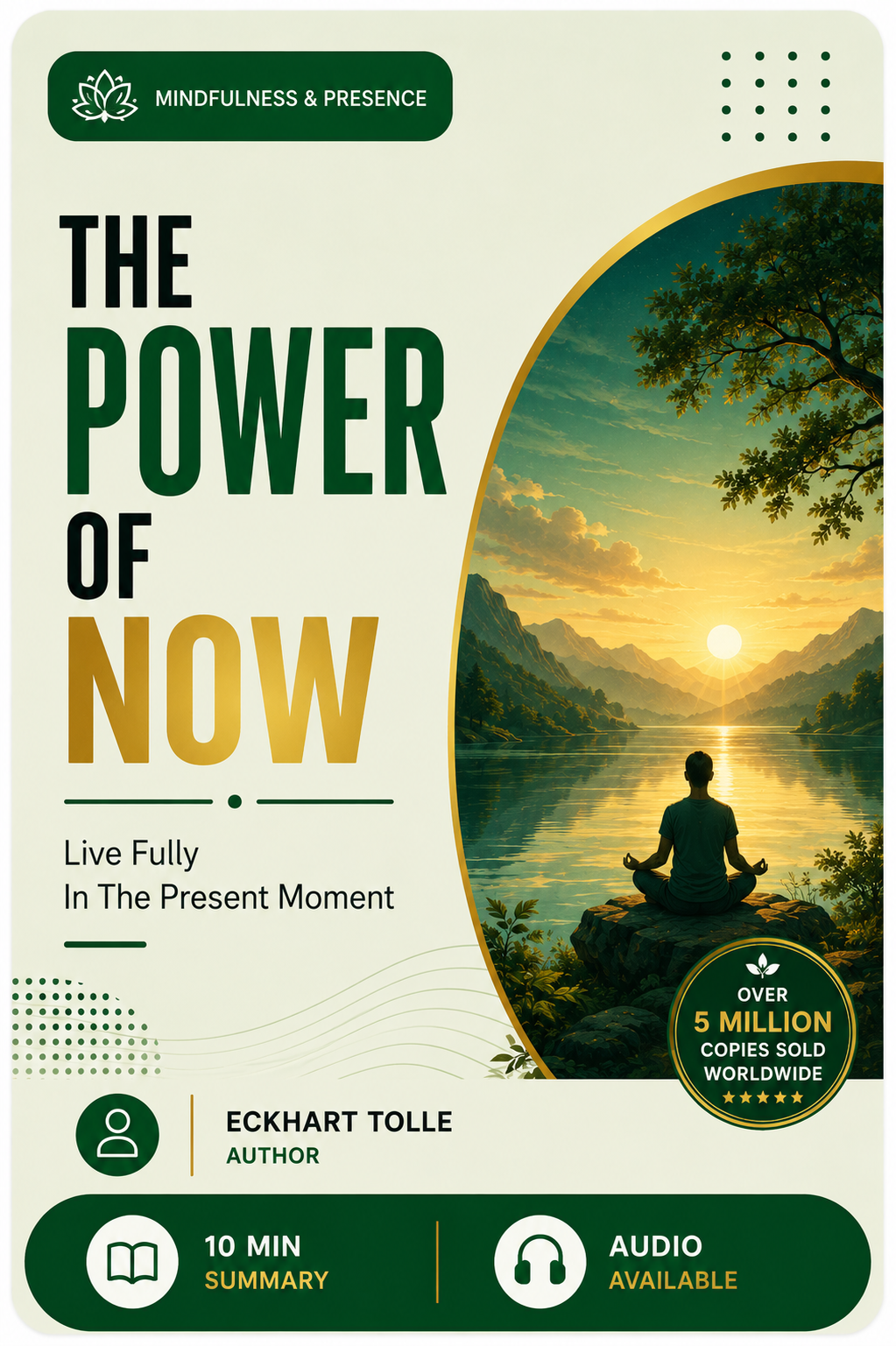
At the heart of The Power of Now is a simple yet life-changing truth:
The present moment is all we truly have.
Most of us spend our lives living somewhere other than where we are. Our minds constantly pull us into memories of the past or worries about the future. We replay mistakes, hold on to regrets, fear what might happen next, and create endless mental stories that often have little to do with reality.
As a result, we miss the life that is unfolding right in front of us.
Eckhart Tolle teaches us that true peace, clarity, and happiness are not found in changing our circumstances but in changing our relationship with the present moment. The more we become aware of our thoughts instead of being controlled by them, the more freedom we experience.
This book reminds us that we are not the voice in our heads. We are the awareness that observes that voice. When we learn to step back from constant thinking and fully engage with the present moment, we discover a deeper sense of peace that is not dependent on success, money, status, or external conditions.
The main message of this book is not to ignore the future or forget the past. It is to stop allowing them to steal our attention from the only moment where life actually exists—the present.
When we become fully present, we stop merely existing and start truly living.
Because no matter where we have been or where we hope to go, our life is always happening here and now.
★★★★★ 5.0·1 ratings
Sign in to permanently save your library, reading progress and ratings.
THE IDEA SPACE
About this book
Understand the central idea, see the six most important ideas, and turn the summary into something practical.
THE CENTRAL IDEA
Core idea
At the heart of The Power of Now is a simple yet life-changing truth:
The present moment is all we truly have.
Most of us spend our lives living somewhere other than where we are. Our minds constantly pull us into memories of the past or worries about the future. We replay mistakes, hold on to regrets, fear what might happen next, and create endless mental stories that often have little to do with reality.
As a result, we miss the life that is unfolding right in front of us.
Eckhart Tolle teaches us that true peace, clarity, and happiness are not found in changing our circumstances but in changing our relationship with the present moment. The more we become aware of our thoughts instead of being controlled by them, the more freedom we experience.
This book reminds us that we are not the voice in our heads. We are the awareness that observes that voice. When we learn to step back from constant thinking and fully engage with the present moment, we discover a deeper sense of peace that is not dependent on success, money, status, or external conditions.
The main message of this book is not to ignore the future or forget the past. It is to stop allowing them to steal our attention from the only moment where life actually exists—the present.
When we become fully present, we stop merely existing and start truly living.
Because no matter where we have been or where we hope to go, our life is always happening here and now.
Why it matters
Most of us spend our lives chasing the next thing.
We tell ourselves:
"I'll be happy when I get that promotion."
"I'll feel at peace when my problems are solved."
"Life will be better when I have more money, more success, or more certainty."
But if we're honest, we know what usually happens. We reach one goal, and before we can truly enjoy it, our mind moves on to the next thing. There is always another problem to solve, another worry to think about, or another future we're waiting for.
This is exactly why The Power of Now matters.
Eckhart Tolle invites us to look at something we rarely question: the constant noise inside our minds. Many of us spend so much time thinking about yesterday or worrying about tomorrow that we forget to fully experience today. We replay old conversations, regret mistakes, imagine worst-case scenarios, and carry mental burdens that steal our peace.
The truth is, life is happening right now.
Not next week.
Not next year.
Not after we achieve our goals.
Not after everything is perfect.
Right now.
This book reminds us that while we cannot change the past and we cannot fully control the future, we can learn to live more consciously in the present moment. And when we do, something powerful happens. We become less anxious, less overwhelmed, and less controlled by our fears. We start noticing the beauty in ordinary moments. We feel more connected to ourselves, the people around us, and the life we are already living.
What makes this book special is that it doesn't ask us to become someone else. It doesn't promise overnight success or tell us to ignore our problems. Instead, it teaches us how to change our relationship with our thoughts. It helps us realize that we are not our worries, our fears, or the endless voice inside our heads.
If you've ever felt stressed, overwhelmed, stuck in overthinking, or like you're constantly waiting for life to begin, this book speaks directly to you.
The lessons inside The Power of Now are simple, but they have the potential to change the way we experience every single day.
Because in the end, the greatest moments of our lives don't happen in the past or the future.
They happen in the present.
And learning how to fully live in that present moment may be one of the most valuable skills we can ever develop.
READ WITH INTENTION
Before you begin
Before reading The Power of Now, you may find yourself:
Constantly overthinking situations that haven't even happened yet.
Replaying past mistakes, failures, or painful memories.
Feeling anxious about the future and uncertain about what lies ahead.
Believing that happiness depends on achieving more, earning more, or becoming more.
Struggling to quiet your mind, even during moments of rest.
Feeling stressed, overwhelmed, or emotionally exhausted by everyday life.
Reacting impulsively to people and situations without awareness.
Looking for peace in external circumstances instead of within yourself.
Feeling disconnected from the present moment and always rushing toward the next thing.
At this stage, life often feels like something we are chasing rather than something we are experiencing.
After applyingAfter genuinely applying the lessons from The Power of Now, you begin to:
Become aware of your thoughts instead of automatically believing them.
Feel calmer and more centered, even during difficult situations.
Let go of unnecessary worries about the future.
Stop carrying the weight of past regrets wherever you go.
Experience greater gratitude for simple moments in everyday life.
Listen more deeply and build stronger relationships.
Respond thoughtfully instead of reacting emotionally.
Discover peace that is not dependent on external success or circumstances.
Feel more connected to yourself, others, and the present moment.
Live with greater clarity, purpose, and inner freedom.
You realize that happiness is not waiting for you somewhere in the future.
It has been available in this moment all along. Before reading this book, we spend our lives chasing peace. After applying its lessons, we realize that peace begins when we stop running and fully arrive in the present moment.
THE SIX IDEA MAP
Six key ideas
The six key ideas already stored in your Woderfin summary — designed to be scanned, remembered and revisited.
6 key ideas
01KEY IDEA
You Are Not Your Mind
Most of us spend our lives believing every thought that enters our minds. We assume our thoughts define who we are. Eckhart Tolle teaches that there is a difference between the thinker and the awareness observing the thoughts. The moment we realize that we are not our thoughts, we gain freedom from unnecessary fear, anxiety, and overthinking.
Imagine you fail an interview and your mind immediately says, "I am not good enough." Instead of believing that thought, you simply observe it. You recognize that it is just a thought, not a fact. This awareness prevents one setback from defining your identity.
02KEY IDEA
The Present Moment Is All You Have
The past exists only as memories, and the future exists only as imagination. The only moment where life truly happens is the present moment. When we stop living in regrets and worries, we begin experiencing life more fully and peacefully.
Instead of spending your evening worrying about next week's presentation, you focus on the task in front of you today. By being fully present, you perform better and feel less stressed.
03KEY IDEA
The Pain-Body Creates Suffering
All of us carry emotional pain from past experiences. This accumulated pain can influence our reactions, relationships, and emotions without us realizing it. Tolle calls this the Pain-Body. Awareness helps us break free from its control.
A small disagreement with a friend triggers intense anger because it reminds you of past rejection. By recognizing the emotional trigger, you respond calmly instead of reacting impulsively.
04KEY IDEA
Acceptance Is The Beginning Of Peace
Many of our problems become worse because we resist reality. We argue mentally with situations we cannot immediately change. Acceptance does not mean giving up; it means seeing reality clearly before taking action.
You get stuck in traffic and become frustrated. Instead of fighting the situation mentally, you accept it and use the time to listen to an audiobook or reflect peacefully.
05KEY IDEA
Presence Transforms Relationships
Most people listen only to respond. True connection happens when we are fully present with another person. Presence creates understanding, empathy, and deeper relationships.
When talking with a family member, you put your phone away and give them your complete attention. The conversation becomes more meaningful and genuine.
06KEY IDEA
Inner Peace Is Available Right Now
Many people believe peace will come after success, wealth, or perfect circumstances. Tolle teaches that peace is available in this moment when we stop resisting life and become fully present.
Even during a stressful day, taking a few deep breaths and focusing on the present moment can help you reconnect with a sense of calm and clarity.
TURN KNOWLEDGE INTO ACTION
Make it practical
Your practical takeaway
After genuinely applying the lessons from The Power of Now, you begin to:
Become aware of your thoughts instead of automatically believing them.
Feel calmer and more centered, even during difficult situations.
Let go of unnecessary worries about the future.
Stop carrying the weight of past regrets wherever you go.
Experience greater gratitude for simple moments in everyday life.
Listen more deeply and build stronger relationships.
Respond thoughtfully instead of reacting emotionally.
Discover peace that is not dependent on external success or circumstances.
Feel more connected to yourself, others, and the present moment.
Live with greater clarity, purpose, and inner freedom.
You realize that happiness is not waiting for you somewhere in the future.
It has been available in this moment all along. Before reading this book, we spend our lives chasing peace. After applying its lessons, we realize that peace begins when we stop running and fully arrive in the present moment.
NEXT STEP
Today
Take five minutes today to sit quietly without any distractions.
Put your phone away, close unnecessary tabs, and simply observe your thoughts.
Don't try to stop them or change them.
Just notice them as if you were watching clouds pass through the sky.
As you do this, remind yourself that you are not your thoughts—you are the awareness observing them.
By the end of these five minutes, ask yourself:
"What is happening in my life right now, in this exact moment?"
You may discover that many of the worries occupying your mind are not actually present at all.
NEXT STEP
This week
Choose one everyday activity and practice doing it with complete presence for the next seven days.
It could be:
Drinking your morning tea or coffee.
Eating a meal.
Walking.
Taking a shower.
Talking with a loved one.
During that activity, give it your full attention.
Notice the sounds, sensations, smells, and details around you.
Whenever your mind wanders into the past or future, gently bring it back to the present moment.
This simple exercise will help you experience how much of life we usually miss while living inside our thoughts.
NEXT STEP
This month
For the next thirty days, spend at least ten minutes each day practicing mindfulness.
You do not need any special equipment or complicated techniques.
Simply sit quietly and focus on your breathing.
When thoughts arise—and they will—notice them without judgment and return your attention to your breath.
Keep a small journal and write down:
What thoughts appear most often.
What situations trigger stress or anxiety.
How your awareness changes throughout the month.
By the end of thirty days, you will likely notice greater calmness, clarity, and emotional control.
NEXT STEP
Long term
Make presence a way of life rather than a temporary practice.
Whenever you feel overwhelmed, stressed, frustrated, or anxious, pause and ask yourself:
"Am I living in this moment, or am I lost in thoughts about the past or future?"
Develop the habit of returning to the present moment throughout the day.
Over time, you will become less reactive, more peaceful, and more connected to the people and experiences around you.
The ultimate lesson of The Power of Now is not to practice presence occasionally—it is to build a life where awareness becomes your natural state.
Long-Term Transformation
If you consistently apply the lessons from this book, you will stop spending so much energy fighting life and start experiencing it more fully.
You will discover that peace is not something you find someday in the future.
It is something you can access in this moment, again and again, for the rest of your life.
Move through your action plan one step at a time.
FINAL TAKEAWAYIf there is one lesson that The Power of Now wants us to remember, it is this: life is not waiting somewhere in the future—it is happening right now.
So many of us spend our days rushing from one goal to the next, carrying regrets from the past and worries about the future. We tell ourselves that we will finally be happy when we achieve something, fix a problem, or reach a certain stage in life. But while we are busy waiting for a better tomorrow, we often miss the beauty, peace, and opportunities that already exist in this moment.
Eckhart Tolle reminds us that true freedom begins when we stop allowing our thoughts to control us. The moment we become aware of our minds instead of being trapped inside them, we discover a deeper sense of clarity and peace. We realize that we are not our fears, our worries, or the endless stories we tell ourselves. We are the awareness behind them.
The present moment may not always be perfect, but it is the only place where life can be experienced, relationships can be nurtured, decisions can be made, and growth can happen.
The more present we become, the less we suffer from things that have already happened and things that have not happened yet. We begin to appreciate life as it is instead of constantly wishing it were different.
Final Lesson
The greatest transformation does not come from changing everything around us. It comes from changing the way we experience what is already around us.
You do not need to wait for a perfect life to feel peace.
You do not need to eliminate every problem before you can be happy.
You do not need to know what the future holds before you can enjoy today.
What you need is to come back to this moment.
Right here.
Right now.
Because the present moment is not just another moment in your life—it is the only moment in which your life truly exists.
And when you learn to live fully in the now, you stop merely passing through life and start truly living it.
The power to change your life has never been in yesterday or tomorrow. It has always been in this moment.FAVOURITE QUOTE“Some books give us information. Some books give us inspiration. And then there are a few books that give us a single sentence powerful enough to change the way we see life.
For The Power of Now, that sentence is:
"Realize deeply that the present moment is all you ever have."
This quote captures the entire essence of the book.
Most of us spend our lives somewhere else. We replay the past, worry about the future, and wait for the perfect moment to be happy. In doing so, we miss the only moment where life is actually happening.
Eckhart Tolle reminds us that the past exists only as memory and the future exists only as imagination. The only reality we can experience is the present moment. Every breath we take, every conversation we have, every opportunity we receive, and every meaningful experience unfolds in the now.
The more we learn to embrace this truth, the more peace, clarity, and freedom we discover within ourselves.
This quote is not just a beautiful idea—it is a daily reminder to stop postponing life and start fully experiencing it.”
— Eckhart Tolle
FIND YOUR REASON TO READ
Who is this book for?
Students | Learn to manage overthinking, improve focus, and become more present while studying and navigating life.
Entrepreneurs | Develop greater mental clarity, remain calm under pressure, and make more conscious decisions.
Professionals | Reduce workplace stress, escape constant mental noise, and bring greater presence into work and everyday life.
Creators | Move beyond self-doubt and overthinking to create with greater freedom, awareness, and clarity.
Parents | Become more patient, emotionally present, and deeply connected in your relationships with your children and family.
Leaders | Lead with greater awareness, emotional balance, clarity, and conscious decision-making.
THE PERSON BEHIND THE IDEAS
Meet the author behind this book
Explore the author information already connected to this title in your Woderfin summary system.
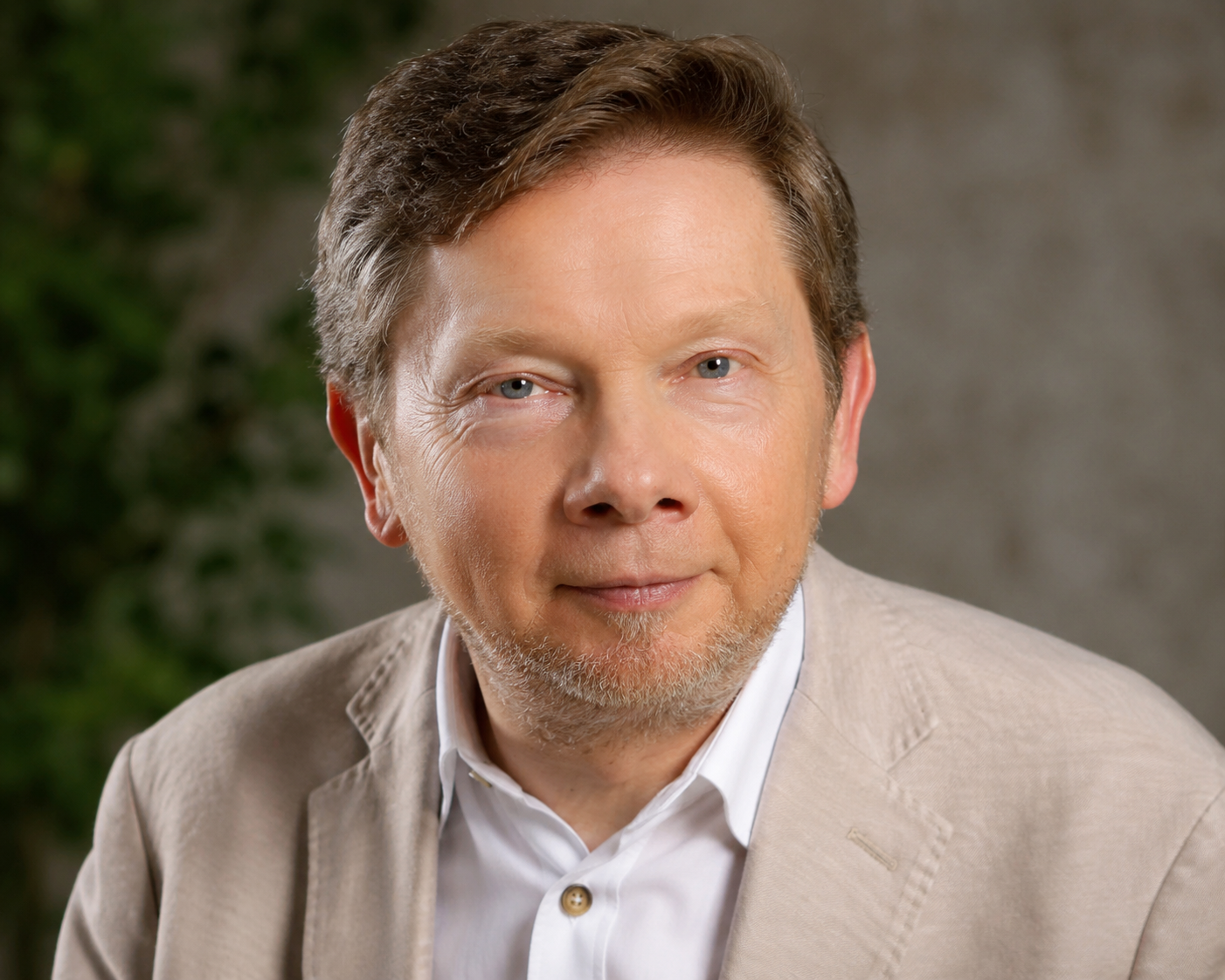
Eckhart Tolle is a spiritual teacher, author, and speaker best known for helping millions of people discover greater peace, awareness, and purpose through mindful living. Born in Germany and later living in England and Canada, Tolle experienced a profound inner transformation at the age of twenty-nine after a period of deep depression and personal struggle.
This life-changing experience led him to explore consciousness, presence, and the nature of human suffering. Over the following years, he developed teachings that emphasized living fully in the present moment and freeing ourselves from excessive identification with our thoughts.
His breakthrough book, The Power of Now, became an international bestseller and has been translated into dozens of languages. The book has influenced readers worldwide, including entrepreneurs, leaders, professionals, students, and spiritual seekers looking for greater clarity and inner peace.
Through his books, workshops, and teachings, Tolle continues to inspire people to live with greater awareness, reduce unnecessary suffering, and discover a deeper connection with themselves and the world around them.
His work combines practical wisdom with spiritual insight, making complex ideas accessible to everyday readers seeking a more meaningful and peaceful life.
Have you ever noticed how your mind never seems to stop talking? Even when everything is fine, it finds something to worry about, analyze, or judge. Eckhart Tolle begins the book by helping us realize something most of us never question: we are not our thoughts.
Many of us spend our entire lives believing every thought that enters our minds. If we think we're not good enough, we believe it. If we think something bad might happen, we become anxious. Over time, we become prisoners of our own thinking.
Tolle invites us to step back and simply observe our thoughts. The moment you notice your thoughts instead of automatically believing them, a new level of awareness begins to emerge. You start realizing that there is a difference between the voice in your head and the deeper awareness that hears that voice.
This simple realization can completely change your life because freedom begins when you stop identifying with every thought that passes through your mind.
Chapter 2: Consciousness – The Way Out of Suffering
All of us carry emotional pain from the past. Some of it comes from childhood experiences, some from heartbreak, rejection, failure, loss, or disappointment. Even when we think we have moved on, that pain often remains hidden beneath the surface.
Tolle calls this accumulated emotional energy the Pain-Body.
The Pain-Body feeds on negativity. It wants you to stay angry, fearful, resentful, or unhappy because those emotions keep it alive. This is why small situations sometimes trigger reactions that seem much bigger than the actual problem.
Think about a time when someone made a simple comment and you reacted much more strongly than the situation deserved. Often, it wasn't the comment itself causing the pain. It was touching an old wound that was already inside you.
The solution is not to fight the Pain-Body or suppress it. Instead, we must become aware of it. The moment we observe our emotional pain without judgment, its power begins to weaken. Awareness becomes the light that slowly dissolves suffering.
Chapter 3: Moving Deeply Into the Now
Most of us believe that happiness exists somewhere in the future.
We tell ourselves:
"I'll be happy when I get that promotion."
"I'll be happy when I earn more money."
"I'll be happy when I find the right relationship."
But there is always another goal waiting after the current one. The future keeps moving further away, and we keep postponing happiness.
Tolle reminds us of a profound truth: the future never arrives as the future. It always arrives as the present moment.
The only moment we ever truly experience is now.
The past survives only as memories in our minds. The future exists only as imagination. Life itself happens in the present. The more we learn to live fully in this moment, the more peaceful and fulfilled we become.
Chapter 4: The Mind's Resistance to the Present
One of the biggest obstacles to inner peace is our tendency to resist reality.
We resist traffic.
We resist delays.
We resist difficult people.
We resist situations we cannot control.
The mind constantly argues with what is happening. It says:
"This shouldn't be happening."
"Things should be different."
"Why me?"
But every moment spent resisting reality creates additional suffering.
Tolle teaches that acceptance is not weakness. Acceptance simply means seeing reality clearly before deciding how to respond. When we stop fighting what already exists, we gain the clarity needed to move forward wisely.
Chapter 5: Presence and Awareness
Presence means giving your full attention to this moment.
When we are present, we are not trapped in memories or worries. We are fully engaged with what is happening right now.
You may have experienced moments of presence while watching a beautiful sunset, walking in nature, listening to music, or spending time with someone you love. During those moments, the constant mental noise disappears, and life feels more vivid.
Tolle explains that presence is not something we need to create. It is our natural state beneath all the mental distractions.
The more present we become, the more peace we experience.
Chapter 6: The Inner Body
Most people live almost entirely inside their minds. Very little attention is given to the body.
Tolle encourages us to reconnect with our inner body by becoming aware of physical sensations. Feeling your breath, noticing the energy in your hands, or simply paying attention to your body can instantly bring you back to the present moment.
The body acts like an anchor. Whenever the mind begins to wander into anxiety or overthinking, returning attention to the body helps restore presence.
This practice may seem simple, but it can be incredibly powerful.
Chapter 7: Beyond Thought and Into Stillness
Modern life is full of noise. We are constantly surrounded by notifications, entertainment, conversations, and distractions.
Because of this, many people become uncomfortable with silence.
Yet Tolle explains that silence is not empty. Silence is one of the deepest gateways to awareness.
When we sit quietly and stop feeding the mind with endless stimulation, we begin to experience a deeper dimension of ourselves that exists beyond thought.
This inner stillness cannot be found through achievement or success. It is discovered through presence.
The more comfortable we become with silence, the more connected we become to ourselves.
Chapter 8: Relationships and Presence
Many relationship problems arise because people are not truly present with one another.
Instead of listening, we prepare our next response.
Instead of understanding, we defend our opinions.
Instead of connecting, we react from old emotional wounds.
When two people bring awareness into a relationship, everything changes. Conversations become deeper. Conflicts become easier to resolve. Compassion grows naturally.
Tolle reminds us that the quality of our relationships is closely connected to the quality of our presence.
The more present we are, the more meaningful our relationships become.
Chapter 9: Finding Peace Beyond Happiness
Most people spend their lives chasing happiness and trying to avoid pain.
But happiness based on external circumstances is temporary. A promotion can make us happy today, but tomorrow the mind wants something else.
Tolle introduces a deeper state than happiness: inner peace.
Peace does not depend on perfect circumstances. It remains available even during difficult times because it comes from acceptance rather than control.
When we stop demanding that life be different before we allow ourselves to feel okay, we discover a sense of peace that is far more stable than temporary happiness.
Chapter 10: The Power of Surrender
The final lesson of the book is surrender.
Many people misunderstand surrender as giving up. Tolle means something very different.
Surrender means accepting the present moment completely before taking action.
When we accept reality, we stop wasting energy fighting what already exists. This allows us to respond with wisdom instead of reacting with fear, frustration, or anger.
Acceptance does not prevent change. In fact, it often makes positive change easier because our actions come from clarity rather than resistance.
The paradox is that the moment we stop fighting life, life becomes easier to navigate.
Final Woderfin Takeaway
If there is one lesson we can carry from The Power of Now, it is this:
Most of our suffering comes from living in a time that does not exist.
We replay the past.
We worry about the future.
We wait for happiness.
We postpone peace.
But life has never happened in yesterday, and it will never happen in tomorrow.
Life is happening right now.
The more fully we learn to live in this moment, the less fear controls us, the less anxiety burdens us, and the more alive we feel.
Because in the end, the present moment is not just a part of life.
The present moment is life itself.
Before reading
Before reading The Power of Now, you may find yourself:
Constantly overthinking situations that haven't even happened yet.
Replaying past mistakes, failures, or painful memories.
Feeling anxious about the future and uncertain about what lies ahead.
Believing that happiness depends on achieving more, earning more, or becoming more.
Struggling to quiet your mind, even during moments of rest.
Feeling stressed, overwhelmed, or emotionally exhausted by everyday life.
Reacting impulsively to people and situations without awareness.
Looking for peace in external circumstances instead of within yourself.
Feeling disconnected from the present moment and always rushing toward the next thing.
At this stage, life often feels like something we are chasing rather than something we are experiencing.
After applying
After genuinely applying the lessons from The Power of Now, you begin to:
Become aware of your thoughts instead of automatically believing them.
Feel calmer and more centered, even during difficult situations.
Let go of unnecessary worries about the future.
Stop carrying the weight of past regrets wherever you go.
Experience greater gratitude for simple moments in everyday life.
Listen more deeply and build stronger relationships.
Respond thoughtfully instead of reacting emotionally.
Discover peace that is not dependent on external success or circumstances.
Feel more connected to yourself, others, and the present moment.
Live with greater clarity, purpose, and inner freedom.
You realize that happiness is not waiting for you somewhere in the future.
It has been available in this moment all along. Before reading this book, we spend our lives chasing peace. After applying its lessons, we realize that peace begins when we stop running and fully arrive in the present moment.
Final takeaway
If there is one lesson that The Power of Now wants us to remember, it is this: life is not waiting somewhere in the future—it is happening right now.
So many of us spend our days rushing from one goal to the next, carrying regrets from the past and worries about the future. We tell ourselves that we will finally be happy when we achieve something, fix a problem, or reach a certain stage in life. But while we are busy waiting for a better tomorrow, we often miss the beauty, peace, and opportunities that already exist in this moment.
Eckhart Tolle reminds us that true freedom begins when we stop allowing our thoughts to control us. The moment we become aware of our minds instead of being trapped inside them, we discover a deeper sense of clarity and peace. We realize that we are not our fears, our worries, or the endless stories we tell ourselves. We are the awareness behind them.
The present moment may not always be perfect, but it is the only place where life can be experienced, relationships can be nurtured, decisions can be made, and growth can happen.
The more present we become, the less we suffer from things that have already happened and things that have not happened yet. We begin to appreciate life as it is instead of constantly wishing it were different.
Final Lesson
The greatest transformation does not come from changing everything around us. It comes from changing the way we experience what is already around us.
You do not need to wait for a perfect life to feel peace.
You do not need to eliminate every problem before you can be happy.
You do not need to know what the future holds before you can enjoy today.
What you need is to come back to this moment.
Right here.
Right now.
Because the present moment is not just another moment in your life—it is the only moment in which your life truly exists.
And when you learn to live fully in the now, you stop merely passing through life and start truly living it.
The power to change your life has never been in yesterday or tomorrow. It has always been in this moment.
You've reached the end.
If this summary gave you something useful, carry one idea into your life.
The Power of Now — English Audio SummaryTap to listen ·