Personal Finance, Self-Help, Investing10 min read28:07
★ ★ ★ ★ ★ 5.0·5 ratings
A WODERFIN AUDIO EXPERIENCE
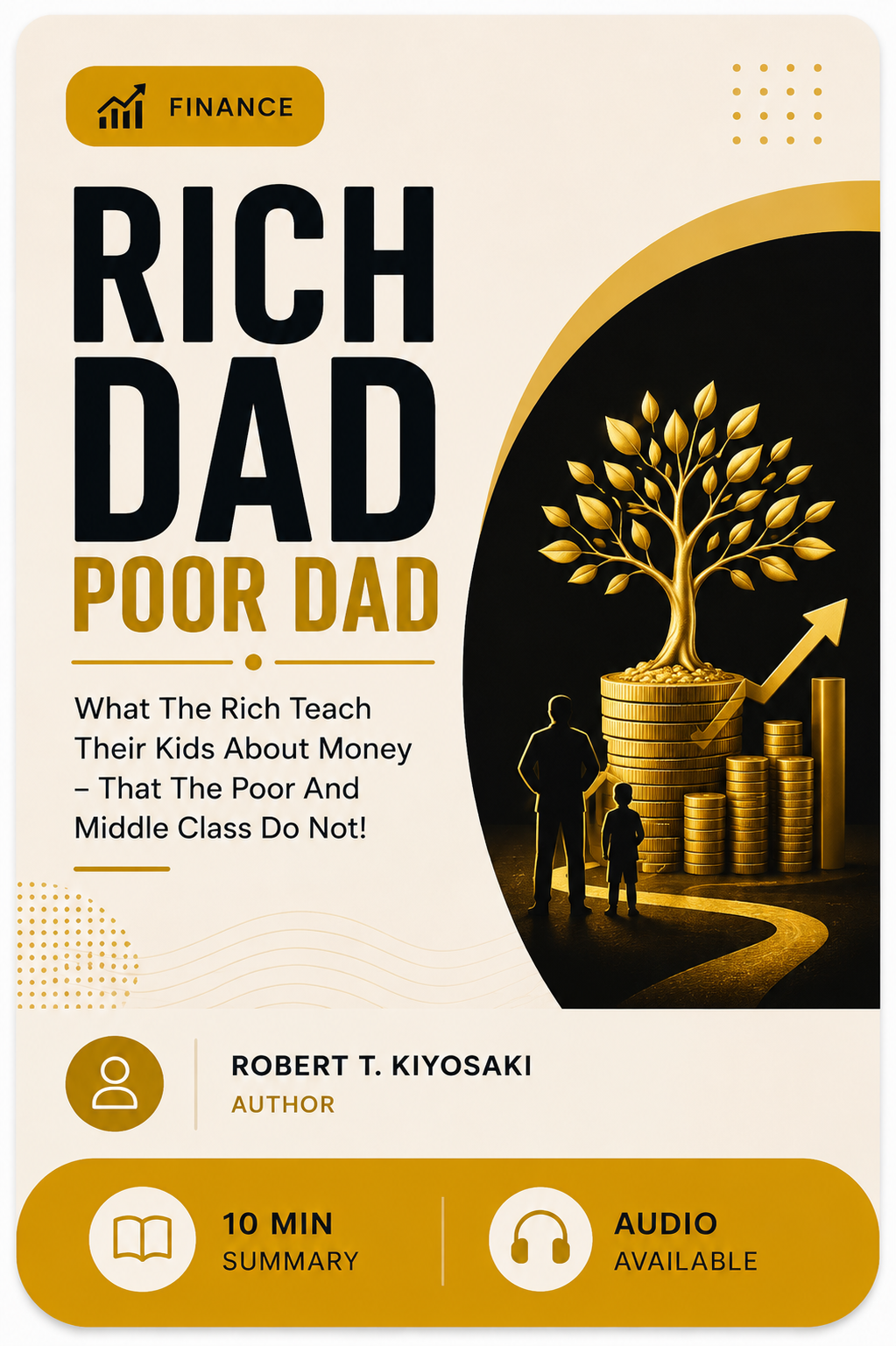
Rich Dad Poor Dad
The central message of Rich Dad Poor Dad is that true wealth comes from financial education, not just earning a high income. Robert T. Kiyosaki explains the importance of understanding assets and liabilities, developing multiple income streams, and adopting the mindset of an investor rather than an employee. By changing how you think about money and making informed financial decisions, you can achieve financial security and create lasting wealth for yourself and future generations.
★★★★★ 5.0·5 ratings
Sign in to permanently save your library, reading progress and ratings.
THE IDEA SPACE
About this book
Understand the central idea, see the six most important ideas, and turn the summary into something practical.
THE CENTRAL IDEA
Core idea
The central message of Rich Dad Poor Dad is that true wealth comes from financial education, not just earning a high income. Robert T. Kiyosaki explains the importance of understanding assets and liabilities, developing multiple income streams, and adopting the mindset of an investor rather than an employee. By changing how you think about money and making informed financial decisions, you can achieve financial security and create lasting wealth for yourself and future generations.
Why it matters
Rich Dad Poor Dad has transformed the way millions of people think about money, wealth, and financial independence. Instead of teaching readers to simply work hard for a paycheck, it encourages them to build assets, invest wisely, and make money work for them. The book challenges traditional beliefs about education, employment, and success while introducing practical financial concepts in a simple, relatable way. Its timeless lessons continue to inspire entrepreneurs, investors, and anyone seeking long-term financial freedom.
READ WITH INTENTION
Before you begin
Before reading Rich Dad Poor Dad, many of us believe that earning a higher salary is the only path to financial success. We often work hard, spend most of what we earn, and assume that buying bigger homes, newer cars, or expensive possessions means becoming wealthier. Investing can feel risky, financial terms may seem confusing, and we rarely think about building assets or creating multiple income streams.
After applyingAfter applying Robert T. Kiyosaki's lessons, we begin thinking like investors instead of only employees. We focus on acquiring assets that generate income, improving our financial knowledge, managing cash flow wisely, and making money work for us. Instead of chasing every paycheck, we start building long-term wealth through smarter decisions, continuous learning, and disciplined investing.
THE SIX IDEA MAP
Six key ideas
The six key ideas already stored in your Woderfin summary — designed to be scanned, remembered and revisited.
6 key ideas
01KEY IDEA
Build Assets Before Buying Luxuries
Robert T. Kiyosaki explains that wealthy people focus on buying assets first because assets generate income and increase wealth over time. Instead of spending money on expensive items that lose value, we should invest in things that produce cash flow. Once our assets begin paying for our lifestyle, we can enjoy luxuries without creating financial stress.
Instead of buying a new smartphone with your annual bonus, invest the money in an index fund or start a small online business. Over time, the returns from that investment can pay for future purchases.
02KEY IDEA
Make Money Work for You
Depending only on a monthly salary limits financial growth. Kiyosaki teaches that money should be invested in assets that continue earning income even when we are not actively working. Passive income creates long-term financial security and eventually leads to financial freedom.
Purchase dividend-paying stocks or invest in a rental property so you continue receiving income every month while keeping your regular job.
03KEY IDEA
Improve Your Financial Intelligence
Financial education is one of the greatest investments we can make. Understanding budgeting, investing, taxes, cash flow, and business helps us make smarter financial decisions and avoid costly mistakes.
Read one personal finance book every month and dedicate time each week to learning about investing before making financial decisions.
04KEY IDEA
Create Multiple Income Streams
Relying on one source of income increases financial risk. Building additional income streams through investments, freelancing, businesses, or digital products provides greater stability and accelerates wealth creation.
Alongside your full-time job, start a blog, YouTube channel, freelance service, or invest in dividend-paying assets that generate extra monthly income.
05KEY IDEA
Think Like an Investor
Successful investors look for opportunities that create long-term value instead of focusing only on short-term spending. Every financial decision should be evaluated based on whether it helps build wealth or simply increases expenses.
Before making a major purchase, ask yourself, "Will this put money into my pocket or take money out of it?" If it doesn't generate value, consider investing the money instead.
06KEY IDEA
Keep Learning and Taking Action
Knowledge alone does not create wealth. Robert T. Kiyosaki emphasizes that learning must be combined with consistent action. Every new skill, investment, and experience helps build confidence and opens the door to better financial opportunities.
Attend a financial workshop, open your first investment account, or start a small side business. Even small actions taken consistently can lead to significant financial growth over time.
TURN KNOWLEDGE INTO ACTION
Make it practical
Your practical takeaway
After applying Robert T. Kiyosaki's lessons, we begin thinking like investors instead of only employees. We focus on acquiring assets that generate income, improving our financial knowledge, managing cash flow wisely, and making money work for us. Instead of chasing every paycheck, we start building long-term wealth through smarter decisions, continuous learning, and disciplined investing.
NEXT STEP
Today
Start your financial journey by understanding where your money goes.
Track every expense you make today, separate your spending into assets and liabilities, and identify one unnecessary expense you can reduce.
Spend at least 20 minutes learning about personal finance or investing, and commit to saving or investing a small amount, no matter how little.
The goal is to build awareness and take your first step toward financial freedom.
NEXT STEP
This week
Create a simple financial plan for the next six months.
Open an investment account if you don't already have one, read one chapter of a personal finance book, and calculate your monthly income, expenses, savings, and debt.
Identify one additional source of income you can realistically start, such as freelancing, tutoring, selling digital products, or investing.
Begin taking action instead of waiting for the perfect opportunity.
NEXT STEP
This month
Build the foundation of your wealth by investing consistently and improving your financial intelligence.
Set up an emergency fund, automate your monthly savings, and make your first investment in an asset such as an index fund, mutual fund, or another long-term investment that matches your goals.
Continue learning about budgeting, taxes, investing, and business so every financial decision becomes more informed and intentional.
NEXT STEP
Long term
Focus on creating lasting financial independence instead of chasing quick wealth.
Continuously build income-generating assets, diversify your investments, develop valuable skills, and create multiple streams of income.
Make financial education a lifelong habit, review your progress regularly, and reinvest your earnings to grow your wealth over time.
The ultimate goal is to reach a point where your assets generate enough income to support the lifestyle you want, giving you the freedom to choose how you spend your time rather than working only for money.
Move through your action plan one step at a time.
FINAL TAKEAWAYThe greatest lesson from Rich Dad Poor Dad is that financial freedom begins with the way you think, not the amount you earn. Throughout the book, Robert T. Kiyosaki shows us that building wealth is not about chasing bigger paychecks—it is about developing financial intelligence, acquiring income-producing assets, and making informed decisions with money. Anyone can improve their financial future by learning continuously, thinking like an investor, and taking consistent action. Whether you are just starting your career or planning for retirement, the principles in this book remind us that success is built one smart decision at a time. If we focus on learning, creating value, and making our money work for us instead of working only for money, we can build lasting wealth, greater financial security, and the freedom to live life on our own terms.FAVOURITE QUOTE“1. "The rich don't work for money. They make money work for them."
What It Means:
Robert T. Kiyosaki reminds us that true wealth comes from creating income-generating assets like investments, businesses, or real estate. Instead of depending only on a paycheck, focus on building sources of income that continue earning even when you're not actively working.
2. "It's not how much money you make. It's how much money you keep."
What It Means:
A high income doesn't guarantee wealth. Saving wisely, investing consistently, and controlling unnecessary expenses are what help you build long-term financial security.
3. "The rich acquire assets. The poor and middle class acquire liabilities they think are assets."
What It Means:
Many people spend money on things that lose value while believing they are investments. Real wealth grows when you buy assets that generate income or appreciate over time.
4. "The single most powerful asset we all have is our mind."
What It Means:
Your mindset and financial knowledge are your greatest advantages. The more you learn and improve your thinking, the better your decisions and opportunities become.
5. "Financial freedom is available to those who learn about it and work for it."
What It Means:
Wealth doesn't happen by accident. It requires continuous learning, smart planning, patience, and disciplined action over many years.
6. "Winners are not afraid of losing. But losers are."
What It Means:
Failure is part of every success story. Instead of fearing mistakes, treat them as lessons that help you become wiser and more confident.
7. "Don't let the fear of losing be greater than the excitement of winning."
What It Means:
Fear often stops people from investing, starting a business, or pursuing opportunities. Calculated risks, supported by knowledge, can lead to meaningful rewards.
8. "Often in the real world, it's not the smart who get ahead, but the bold."
What It Means:
Knowledge is important, but taking action matters even more. Those who combine learning with courage are often the ones who create opportunities for themselves.
9. "Money is only an idea."
What It Means:
Money is a tool, not the goal. Creativity, problem-solving, and the ability to recognize opportunities are what ultimately create wealth.
10. "The more a person seeks security, the more that person gives up control over life."
What It Means:
Playing it completely safe may feel comfortable, but it can also limit growth. Building financial independence requires taking responsibility, learning new skills, and making informed decisions outside your comfort zone.”
— Robert T. Kiyosaki
FIND YOUR REASON TO READ
Who is this book for?
["If you're a student, Rich Dad Poor Dad can change the way you think about your future. Instead of believing that good grades and a high-paying job are the only paths to success, this book teaches you the importance of financial education, investing early, and developing skills that create long-term wealth.","Entrepreneurs will discover why building assets, creating systems, and solving real problems are the keys to financial freedom. Robert T. Kiyosaki encourages business owners to think beyond earning income and focus on creating businesses and investments that continue generating value over time.","Whether you're just starting your career or have years of experience, this book helps you look beyond your monthly paycheck. It teaches professionals how to manage money wisely, invest consistently, reduce financial dependence on a single income, and work toward long-term financial independence.","Content creators, freelancers, writers, designers, artists, and digital entrepreneurs can learn how to turn their creativity into lasting income. The book encourages creators to build digital assets, intellectual property, and multiple revenue streams instead of relying only on one-time earnings.","Parents who want to give their children a better financial future will find this book especially valuable. It highlights the importance of teaching children about money, saving, investing, entrepreneurship, and financial responsibility—lessons that are rarely taught in traditional schools but can benefit them for a lifetime.","Whether you lead a team, a business, a community, or simply want to lead your own life with confidence, this book offers valuable insights. It teaches leaders to think strategically, make informed financial decisions, embrace continuous learning, and create opportunities instead of waiting for them. By developing financial intelligence and a long-term mindset, leaders can inspire others while building a more secure and meaningful future for themselves and those around them."]
THE PERSON BEHIND THE IDEAS
Meet the author behind this book
Explore the author information already connected to this title in your Woderfin summary system.
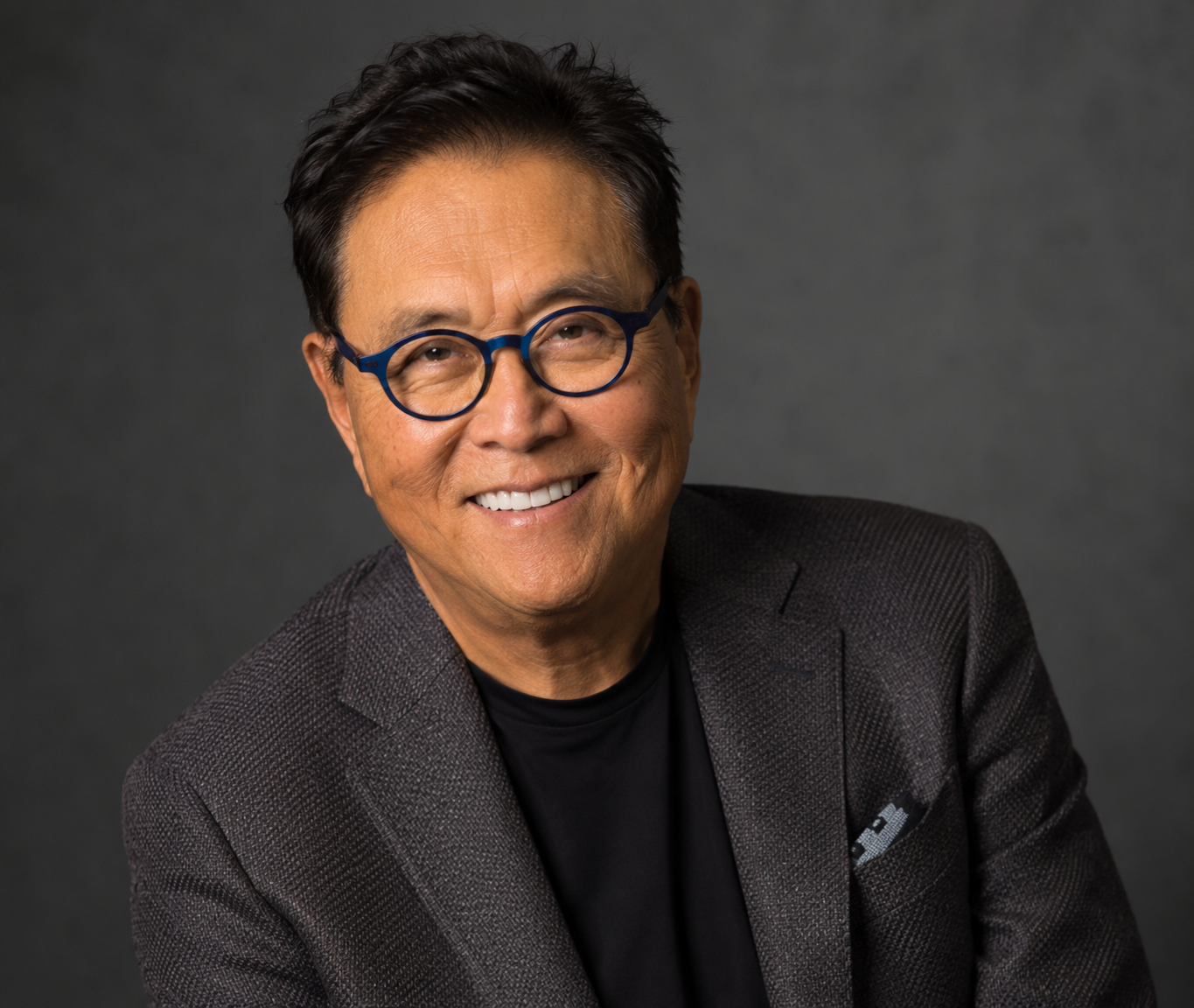
Robert T. Kiyosaki is an American entrepreneur, investor, educator, and bestselling author best known for transforming the way millions of people think about money and wealth. Born on April 8, 1947, in Hilo, Hawaii, he served in the U.S. Marine Corps before building his career in business and financial education. Kiyosaki gained worldwide recognition with Rich Dad Poor Dad, a groundbreaking book that challenges traditional beliefs about earning, saving, and investing money. Through the Rich Dad brand, he has taught people the importance of financial literacy, cash flow, entrepreneurship, and building income-generating assets. His books encourage readers to think beyond earning a salary and instead focus on creating long-term wealth and financial independence. Over the years, Robert T. Kiyosaki has written numerous bestselling books, hosted educational seminars, and inspired millions to take control of their financial future through continuous learning, smart investing, and an entrepreneurial mindset.
By Robert T. Kiyosaki · 10 minute reading experience
Chapter 1: Rich Dad, Poor Dad – Two Different Ways of Thinking
Robert Kiyosaki grows up learning from two father figures who have completely different beliefs about money. His Poor Dad is highly educated and believes that getting good grades, finding a secure job, and working hard will lead to financial success. His Rich Dad, on the other hand, believes that financial education, investing, and owning businesses are the real paths to wealth.
As we read this chapter, we realize that success isn't determined by how much education we have or how high our salary is. Instead, it depends on how well we understand money and use it wisely. The chapter encourages us to question traditional advice and start developing a wealth-building mindset.
Main Points
Your mindset about money shapes your future.
Financial education is as important as academic education.
Wealth begins with changing the way you think.
Chapter 2: The Rich Don't Work for Money
In this chapter, Robert T. Kiyosaki introduces one of the most powerful ideas in the entire book: wealthy people don't spend their lives working only for a paycheck—they learn how to make money work for them. Through the lessons of Rich Dad, we begin to understand that many of us are trapped in a cycle of earning, spending, and repeating the same routine every month. Rich Dad calls this the "Rat Race." The more we earn, the more our expenses usually increase, keeping us dependent on our next paycheck.
Kiyosaki explains that the biggest reason people remain stuck is not a lack of intelligence but the emotions of fear and greed. We fear not having enough money, so we work harder for security. Then, when we receive a salary, we want a bigger house, a newer car, or more expensive things. These desires push us into taking on more expenses, forcing us to work even harder. Before we realize it, our money controls us instead of the other way around.
The lesson for you and me is simple but life-changing. Instead of asking, "How can I earn more money?" we should start asking, "How can I build assets that generate income?" Whether it's investing, starting a business, or creating other income sources, the goal is to let our money grow without relying entirely on our time.
Robert T. Kiyosaki reminds us that financial freedom doesn't happen because we get a higher salary. It happens when we develop financial intelligence, control our emotions, and make smart decisions that allow our money to keep working—even when we are not.
Main Takeaways
Don't become dependent on a paycheck alone.
Fear and greed often control financial decisions.
Build assets instead of only increasing expenses.
Learn financial intelligence before chasing a higher income.
The ultimate goal is to make your money work for you, not spend your life working for money.
Chapter 3: Why Financial Literacy Matters
In this chapter, Robert T. Kiyosaki explains that earning a good income is only one part of becoming financially successful. The real difference between people who build lasting wealth and those who struggle financially lies in financial literacy—the ability to understand how money works and make smart financial decisions. According to Kiyosaki, many people spend years learning academic subjects but very little time learning how to manage, invest, or grow their money.
One of the most important lessons in this chapter is understanding the difference between assets and liabilities. Rich Dad teaches that an asset is something that puts money into your pocket, while a liability takes money out of it. This sounds simple, but many people misunderstand it. For example, a rental property that generates monthly income can be an asset, while an expensive car with loan payments, insurance, and maintenance costs is usually a liability because it continuously drains your money.
As we read this chapter, we begin to realize that financial success is not determined by how much we earn but by how wisely we use what we earn. You and I may receive a salary every month, but if we spend all of it on unnecessary purchases without investing in income-generating assets, building wealth becomes difficult. Wealth is created by consistently making choices that strengthen our financial future rather than satisfy short-term desires.
Robert T. Kiyosaki also encourages us to pay attention to cash flow, not just income. Many people look wealthy because they earn high salaries, yet they live under constant financial pressure because their expenses keep increasing. True financial freedom comes when our assets generate enough income to cover our living expenses, allowing us to rely less on active work and more on the wealth we have built.
This chapter reminds us that financial literacy is a lifelong skill. The more we learn about budgeting, investing, taxes, business, and money management, the better equipped we become to make decisions that protect and grow our wealth. Instead of working harder every year, we should focus on becoming financially smarter. That shift in thinking can completely change the direction of our financial journey.
Main Takeaways
Financial literacy is the foundation of long-term wealth.
Learn the difference between assets and liabilities.
Focus on improving your cash flow, not just your salary.
Invest in income-generating assets instead of unnecessary expenses.
The more you understand money, the better your financial decisions become.
Chapter 4: Mind Your Own Business
In Chapter 4, Robert T. Kiyosaki introduces a lesson that sounds simple but can completely change the way we think about our careers and financial future: mind your own business. At first, this advice may seem confusing. After all, most of us already have a job or profession. However, Kiyosaki isn't telling us to quit our jobs. Instead, he encourages us to build something that belongs to us while we continue earning a living.
According to Rich Dad, many people spend their entire lives helping someone else become wealthier. They work hard, receive a paycheck, and dedicate their best years to growing their employer's business. While there is nothing wrong with having a job, the real mistake is depending on that job as our only source of income. If we lose that paycheck, our financial security can disappear overnight.
This chapter encourages you and me to focus on building assets that we own. These assets might include investments, rental properties, stocks, businesses, intellectual property, or any source of income that continues generating money over time. The goal is not to become rich overnight but to slowly create a financial foundation that grows stronger every year.
Robert T. Kiyosaki explains that many people celebrate buying bigger houses, luxury cars, or expensive possessions. While these purchases may look impressive, they often increase monthly expenses instead of creating wealth. Rich Dad believes our first priority should be acquiring assets that produce income. Once those assets begin generating steady cash flow, we can enjoy luxuries without putting our financial future at risk.
The chapter also reminds us that building wealth requires patience and consistency. You don't need to own a large company to start. Even small investments, side businesses, or skills that generate additional income can become valuable assets over time. Every asset you build today brings you one step closer to financial independence.
Ultimately, Robert T. Kiyosaki teaches that your job pays your monthly bills, but your business—your assets—creates your future. The more you focus on building and protecting what you own, the more control you gain over your financial life.
Main Takeaways
Keep your job, but don't depend on it forever.
Build assets that generate long-term income.
Focus on ownership instead of only earning a salary.
Avoid buying liabilities before building wealth.
Financial freedom grows from what you own, not just where you work.
Chapter 5: The History of Taxes and the Power of Corporations
In Chapter 5, Robert T. Kiyosaki challenges the common belief that the wealthy become richer simply because they earn more money. Instead, he explains that one of the biggest advantages successful entrepreneurs and investors have is their understanding of taxes, businesses, and financial laws. According to Rich Dad, financial intelligence is not only about making money but also about knowing how to protect and grow it.
Kiyosaki briefly explains the history of taxes and points out that income taxes were originally introduced with the idea of taxing the rich. However, over time, these taxes expanded to include ordinary workers as well. Rich Dad believes that many people never take the time to understand how the tax system works. As a result, they pay more than necessary simply because they lack financial knowledge.
One of the chapter's key ideas is the power of corporations. Robert T. Kiyosaki explains that business owners often have legal financial advantages because many business expenses can be deducted before taxes are calculated. Employees, on the other hand, usually receive their salary, pay taxes first, and then use the remaining money for their personal expenses. This difference shows why understanding business and investing can play an important role in building long-term wealth.
The lesson for you and me is not that taxes are bad or that everyone should immediately start a corporation. Instead, Kiyosaki encourages us to become financially educated so we can make smarter decisions. When we understand taxes, investments, accounting, and business structures, we gain more control over our financial future. Knowledge allows us to keep more of what we earn and use that money to create even greater opportunities.
Ultimately, Robert T. Kiyosaki reminds us that wealth is not built by working harder alone. It is built by working smarter, understanding the financial system, and using legal strategies to protect the money we earn. The more we learn about business and finance, the better equipped we become to build lasting financial freedom.
Main Takeaways
Financial intelligence helps you protect as well as grow your wealth.
Learn how taxes and business structures work instead of ignoring them.
Business owners often have legal financial advantages that employees may not.
Understanding accounting, investing, and taxes leads to better financial decisions.
Building wealth requires knowledge, strategy, and smart financial planning—not just a higher income.
Chapter 6: Lesson 5 – The Rich Invent Money
In Lesson 5: The Rich Invent Money, Robert T. Kiyosaki introduces one of the most inspiring ideas in Rich Dad Poor Dad: wealth is often created through creativity, knowledge, and the ability to recognize opportunities that others fail to see. According to Kiyosaki, the rich don't wait for perfect conditions or depend only on a high-paying job. Instead, they develop the mindset to spot opportunities, solve problems, and create value. In other words, they "invent money" by using their financial intelligence.
Rich Dad explains that opportunities are everywhere, but not everyone notices them. Two people can look at the same situation and see completely different possibilities. While one person sees risk and walks away, another sees potential and takes calculated action. The difference is not luck—it's preparation, education, and the willingness to think differently.
This chapter encourages you and me to understand that financial success doesn't always require a large amount of money to begin with. What matters more is our ability to keep learning, improve our skills, and make informed decisions. Whether it's identifying an undervalued investment, starting a business, or solving a problem that people are willing to pay for, opportunities often reward those who are prepared to act.
Robert T. Kiyosaki also reminds us that fear, self-doubt, and hesitation prevent many people from taking advantage of great opportunities. Successful investors and entrepreneurs are not fearless—they simply learn how to manage risk better than most people. They educate themselves, gather information, and make decisions based on knowledge instead of emotion.
The chapter also highlights the importance of continuous learning. Financial markets, businesses, and industries constantly change, and those who stay curious are more likely to discover new opportunities. Every book we read, every skill we develop, and every lesson we learn increases our ability to recognize opportunities that others might overlook.
Ultimately, Robert T. Kiyosaki teaches that money is not created only by working harder. It is created by thinking creatively, solving problems, recognizing opportunities, and having the confidence to take intelligent action. The richer our financial knowledge becomes, the more opportunities we are likely to see—and the greater our ability to build lasting wealth.
Main Takeaways
Financial intelligence helps you discover opportunities others miss.
Wealth is often created through creativity and problem-solving.
Learn to take calculated risks instead of acting out of fear.
Keep improving your knowledge and skills to recognize new opportunities.
Success comes from seeing possibilities where others only see obstacles.
Chapter 7: Lesson 6 – Work to Learn, Don't Work for Money
In the final lesson of Rich Dad Poor Dad, Robert T. Kiyosaki explains that the greatest investment you can ever make is investing in yourself. Most people choose jobs based only on the salary they offer. While earning a good income is important, Kiyosaki believes that focusing only on money can limit your long-term success. Instead, he encourages us to choose opportunities that help us develop valuable skills, gain experience, and expand our knowledge.
Rich Dad teaches that every job has something important to offer beyond a paycheck. One role may teach us communication; another may improve our leadership, while another helps us understand sales, marketing, negotiation, or management. These skills stay with us for life and often become more valuable than the salary we receive. According to Robert T. Kiyosaki, people who continuously learn become more adaptable, confident, and capable of creating opportunities wherever they go.
This chapter also highlights that many talented people remain financially stuck because they become experts in only one area. A highly skilled engineer, doctor, or accountant may earn a good income but still struggle financially if they lack business or financial knowledge. Rich Dad believes that true success comes from becoming a well-rounded learner who understands not only a profession but also communication, investing, business, and money management.
The lesson for you and me is clear: don't be afraid to step outside your comfort zone. Sometimes accepting a role that teaches a valuable skill can be more beneficial than taking a higher-paying job that offers little personal growth. Every new experience increases our confidence and prepares us for bigger opportunities in the future.
Robert T. Kiyosaki reminds us that the world is constantly changing. Technology evolves, industries transform, and careers shift. Those who continue learning, adapting, and improving themselves are far more likely to succeed than those who stop growing after finding a stable job.
Ultimately, this chapter teaches that money is temporary, but knowledge and skills stay with you forever. The more you learn, the more valuable you become, and the more opportunities you create to achieve financial freedom and personal success.
Main Takeaways
Work to gain knowledge and skills, not just a paycheck.
Invest in yourself through continuous learning and personal growth.
Develop skills like communication, sales, leadership, and financial management.
Don't limit yourself to one area of expertise.
Long-term success comes from learning, adapting, and using your knowledge to create opportunities.
Chapter 8: Overcoming Obstacles
In Chapter 7, Robert T. Kiyosaki explains that the biggest barriers to financial success are often not a lack of money, education, or opportunity—they are the obstacles within our own minds. Rich Dad believes that anyone can learn to build wealth, but only if they are willing to overcome the fears, doubts, and habits that hold them back. According to Kiyosaki, financial freedom begins with changing the way we think before changing the way we earn.
One of the first obstacles he discusses is fear. Many people are afraid of losing money, so they avoid investing or starting something new. While being careful is important, allowing fear to control every decision can prevent us from taking opportunities that could improve our lives. Rich Dad teaches that successful investors are not people who never lose—they are people who learn from their mistakes and continue moving forward with greater knowledge.
Another common obstacle is cynicism, or the habit of focusing only on negative possibilities. Robert T. Kiyosaki explains that many people immediately reject good opportunities because they assume they won't work. Instead of asking, "What if I fail?" we should ask, "What can I learn?" A positive and curious mindset helps us discover possibilities that others often ignore.
Kiyosaki also points to laziness disguised as being busy. Many people spend their entire day working, yet never make time to improve their financial knowledge or build assets. Staying busy does not always mean making progress. Real growth comes when we intentionally invest time in learning, planning, and creating opportunities for the future.
Another obstacle is bad habits. The way we spend money, manage our time, and make daily decisions has a lasting impact on our financial future. Small, positive habits—such as saving regularly, reading financial books, or investing consistently—can produce remarkable results over time.
Finally, Robert T. Kiyosaki discusses arrogance, which can prevent people from learning. Some believe they already know enough and ignore valuable advice. Rich Dad reminds us that staying humble and open to learning is one of the greatest strengths anyone can have.
Ultimately, this chapter teaches that the path to financial success is not free from challenges. However, when we overcome fear, negativity, poor habits, and the reluctance to learn, we unlock our ability to grow financially and personally. The greatest investment we can make is not only in our money but also in our mindset.
Main Takeaways
Fear should be managed, not allowed to control your decisions.
Learn from failures instead of letting them stop you.
Replace negative thinking with curiosity and a willingness to learn.
Build positive financial habits that support long-term wealth.
Stay humble, keep learning, and continuously improve your mindset.
Chapter 9: Getting Started
In Chapter 8, Robert T. Kiyosaki moves from theory to action. After explaining the principles of financial intelligence throughout the book, he now answers an important question: How do we actually begin? Rich Dad believes that knowledge alone is not enough. Reading books, attending seminars, or watching financial videos can inspire us, but our lives only change when we apply what we learn. According to Kiyosaki, every wealthy person started with a first step, and we can do the same.
Robert T. Kiyosaki encourages us to first find a purpose that is stronger than our fears. Building wealth takes time, and there will be moments of uncertainty and setbacks. A clear reason—such as providing a better future for our family, achieving financial freedom, or creating the life we truly want—gives us the motivation to keep moving forward even when challenges arise.
Another important lesson is the value of continuous learning. Rich Dad advises us to read books, attend workshops, learn from successful people, and stay curious about investing, business, and personal finance. The more we expand our financial knowledge, the more opportunities we begin to recognize. Learning should become a lifelong habit rather than a one-time event.
Kiyosaki also recommends surrounding ourselves with positive and knowledgeable people. The people we spend time with often influence our mindset, habits, and decisions. By learning from individuals who have already achieved financial success, we can avoid common mistakes and grow much faster than trying to figure everything out alone.
This chapter reminds you and me that taking small, consistent actions is more important than waiting for the perfect opportunity. We don't need to become experts overnight or invest huge amounts of money immediately. Starting with small investments, building savings, developing new skills, or creating an additional source of income can gradually lead to significant financial progress over time.
Ultimately, Robert T. Kiyosaki teaches that success belongs to those who take action. Financial freedom is not achieved through luck but through consistent learning, smart decisions, and the courage to begin. Every small step we take today brings us closer to the future we want to create.
Main Takeaways
Turn financial knowledge into action.
Find a strong purpose that motivates you to keep going.
Make continuous learning a lifelong habit.
Surround yourself with people who inspire growth and success.
Start small, stay consistent, and focus on long-term progress.
Chapter 10: Still Want More? Here Are Some To-Do's
In the final chapter of Rich Dad Poor Dad, Robert T. Kiyosaki shares practical advice for readers who are ready to take control of their financial future. Throughout the book, he has explained the importance of financial education, assets, cash flow, and developing the right mindset. Now, he focuses on the habits and actions that can help us turn those lessons into real results. Rich Dad reminds us that knowledge becomes valuable only when we consistently apply it.
One of Kiyosaki's first suggestions is to never stop learning. Financial markets, businesses, and investment opportunities constantly change, so staying informed is essential. Reading books, attending seminars, listening to experienced investors, and learning from successful entrepreneurs can continuously improve our financial intelligence. The more we learn, the better prepared we become to recognize opportunities that others overlook.
Another important lesson is to surround yourself with people who inspire growth. Robert T. Kiyosaki believes that our environment shapes our thinking. Spending time with optimistic, knowledgeable, and financially successful people encourages us to think bigger, ask better questions, and make wiser decisions. At the same time, we should be willing to seek advice from experts while also thinking independently instead of blindly following the crowd.
Kiyosaki also encourages us to take action instead of waiting for the perfect moment. Many people spend years planning but never begin. Rich Dad explains that making small investments, starting a side business, improving our skills, or creating an additional income stream is often better than waiting until everything feels certain. Progress comes from consistent action, not from perfect timing.
The chapter also reminds you and me to learn from mistakes instead of fearing them. Every successful investor or entrepreneur has faced setbacks. Rather than seeing failure as the end of the journey, we should treat it as valuable feedback that helps us make better decisions in the future. Confidence grows through experience, not by avoiding challenges.
Ultimately, Robert T. Kiyosaki concludes that financial freedom is a lifelong journey. There is no shortcut to lasting wealth, but with continuous learning, disciplined action, patience, and the courage to think differently, we can steadily build a stronger financial future. The most important step is to begin today and keep improving one decision at a time.
Main Takeaways
Continue learning about money, investing, and business throughout your life.
Surround yourself with people who encourage growth and success.
Take action instead of waiting for the perfect opportunity.
Treat mistakes as learning experiences that build confidence.
Financial freedom is achieved through consistent learning, smart decisions, and disciplined action over time.
Chapter 10: Conclusion
Rich Dad Poor Dad by Robert T. Kiyosaki is much more than a book about money—it is a book about changing the way we think. Throughout its pages, Kiyosaki reminds us that financial success is not determined by our salary, job title, or academic qualifications. Instead, it is shaped by our mindset, financial education, daily habits, and the choices we make over time.
One of the greatest lessons we can take from this book is that wealth is built intentionally, not accidentally. Every financial decision, whether it's saving, investing, learning a new skill, or purchasing an asset instead of a liability, moves us either closer to or further away from financial freedom. Small, consistent actions often create far greater results than occasional big decisions.
Robert T. Kiyosaki also encourages you and me to see challenges as opportunities to grow. Fear, failure, and uncertainty are natural parts of every financial journey, but they should never stop us from learning and taking action. Every mistake teaches us something valuable, and every lesson makes us better prepared for future opportunities.
Perhaps the most powerful message of Rich Dad Poor Dad is that financial education is a lifelong journey. The world continues to change, and so do the ways we earn, invest, and build wealth. Those who remain curious, adaptable, and willing to learn will always have an advantage over those who rely only on a paycheck.
If there is one idea worth remembering after finishing this book, it is this: don't just work for money—learn how to make money work for you. Focus on building assets, developing valuable skills, making informed financial decisions, and creating multiple sources of income. Over time, these habits can lead to greater security, independence, and freedom.
In the end, Rich Dad Poor Dad doesn't promise instant riches or easy success. Instead, it offers a new perspective—one that challenges us to think differently, learn continuously, and take responsibility for our financial future. When we apply these principles with patience and discipline, we don't just improve our finances—we create a life with more choices, greater confidence, and lasting financial freedom.
Before reading
Before reading Rich Dad Poor Dad, many of us believe that earning a higher salary is the only path to financial success. We often work hard, spend most of what we earn, and assume that buying bigger homes, newer cars, or expensive possessions means becoming wealthier. Investing can feel risky, financial terms may seem confusing, and we rarely think about building assets or creating multiple income streams.
After applying
After applying Robert T. Kiyosaki's lessons, we begin thinking like investors instead of only employees. We focus on acquiring assets that generate income, improving our financial knowledge, managing cash flow wisely, and making money work for us. Instead of chasing every paycheck, we start building long-term wealth through smarter decisions, continuous learning, and disciplined investing.
Final takeaway
The greatest lesson from Rich Dad Poor Dad is that financial freedom begins with the way you think, not the amount you earn. Throughout the book, Robert T. Kiyosaki shows us that building wealth is not about chasing bigger paychecks—it is about developing financial intelligence, acquiring income-producing assets, and making informed decisions with money. Anyone can improve their financial future by learning continuously, thinking like an investor, and taking consistent action. Whether you are just starting your career or planning for retirement, the principles in this book remind us that success is built one smart decision at a time. If we focus on learning, creating value, and making our money work for us instead of working only for money, we can build lasting wealth, greater financial security, and the freedom to live life on our own terms.
You've reached the end.
If this summary gave you something useful, carry one idea into your life.
Rich Dad Poor Dad — English Audio SummaryTap to listen · 28:07